DOJ and Global Allies Dismantle Notorious Gootloader Cyber Ring
The Department of Justice, alongside international law enforcement partners in Germany, the UK, and Europol, has successfully dismantled the sprawling Gootloader malware and corporate extortion infrastructure.
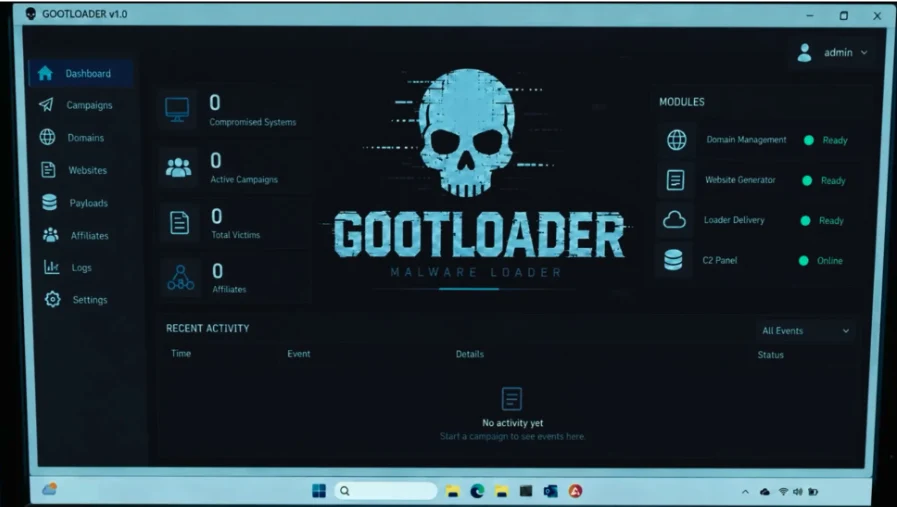
- DOJ, FBI, and Europol seize 56 servers and 400+ domains dismantling Gootloader malware syndicate.
- Criminal network used SEO poisoning on business contract sites to breach over 200,000 corporate endpoints.
- Syndicate served as primary initial-access broker for high-profile global ransomware cartels.
WASHINGTON & THE HAGUE — In one of the most sophisticated and far-reaching international cybercrime disruptions in federal law enforcement history, the United States Department of Justice, in coordination with the FBI and police authorities across Germany, the United Kingdom, and the Netherlands, announced Thursday the complete takedown of the notorious "Gootloader" malware syndicate. The multinational operation seized command-and-control server infrastructure, frozen illicit cryptocurrency wallets, and dismantled a criminal distribution network responsible for extorting hundreds of millions of dollars from American healthcare systems, educational institutions, and critical infrastructure corporations.
Gootloader, a sophisticated malware-as-a-service (MaaS) platform that operated for more than seven years under various aliases, functioned as the premier initial-access broker for elite Russian-speaking ransomware syndicates, including LockBit, BlackCat, and Hive. The criminal enterprise utilized an advanced technique known as search engine optimization (SEO) poisoning, compromising legitimate WordPress websites and manipulating search engine algorithms so that unsuspecting corporate professionals searching for standard business contracts, legal templates, and administrative forms were redirected to malicious landing pages that silently downloaded secondary stealth payloads.
According to unsealed federal indictments in the District of Columbia and the Southern District of Texas, the Gootloader infrastructure infected over two hundred thousand corporate and government endpoints across forty countries. Once embedded inside an enterprise network, the operators harvested administrative credentials, mapped internal data directories, and sold active network persistence to high-level ransomware affiliates who subsequently encrypted sensitive data repositories and demanded millions in ransom payments under threat of public disclosure.
"Today's coordinated global takedown delivers a devastating blow to a cybercriminal syndicate that operated under the delusion of digital impunity," Deputy Attorney General Lisa Monaco stated during a joint press briefing at the Department of Justice headquarters. "Gootloader was the digital gateway that enabled destructive ransomware attacks against American hospitals, emergency service networks, and municipal utilities. By seizing their servers, sinking their illicit domains, and dismantling their operational code, we have neutralized a primary highway of global ransomware extortion."
The takedown operation, codenamed "Operation Broken Anchor," executed synchronized law enforcement raids across twelve countries early Thursday morning. Federal agents and European cyber investigators seized fifty-six command-and-control servers in Frankfurt, London, and Zurich, while international domain registries seized control of more than four hundred malicious redirection domains, routing web traffic to law enforcement splash pages displaying international seizure notices.
Cybersecurity analysts and corporate defense specialists celebrated the takedown as a critical structural victory in the ongoing war against organized digital extortion. While federal prosecutors emphasized that ongoing grand jury investigations are actively pursuing the fugitive ringleaders operating from safe-haven jurisdictions, the destruction of Gootloader's technical infrastructure eliminates a primary conduit of corporate breach activity, significantly elevating cybersecurity resilience for thousands of American businesses.
Congressional testimony scheduled for later this month is expected to address cross-agency coordination, focusing specifically on supply chain resiliency, sovereign compute clusters, and long-term capital allocation strategies designed to safeguard domestic competitiveness.