New York State Health and Environmental Regulators Launch Inquiry Into Unannounced ICE Tent Facility in Batavia
Following whistle-blower disclosures and satellite imagery revealing rapid construction of industrial canvas housing units at the federal immigration processing center in Western New York, state environmental and health commissioners issued emergency demands for site inspections and regulatory documentation.
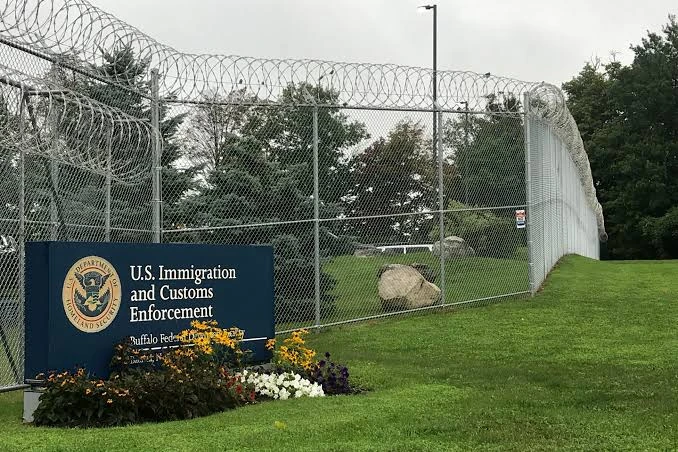
- State DEC and Department of Health issue formal notice demanding immediate physical access and engineering blueprints for new tent structures in Batavia.
- Whistle-blower reports allege industrial tent compounds were erected without municipal environmental permits or severe winter weather HVAC safeguards.
- Immigrant rights coalitions file emergency federal court petitions citing sub-freezing Lake Ontario lake-effect snow hazards for detained individuals.
BATAVIA, N.Y. — An escalating legal and jurisdictional standoff between Albany and federal immigration authorities intensified sharply on Monday as New York State environmental and public health agencies initiated a joint regulatory investigation into an unannounced, rapid expansion of temporary tent-based detention facilities at the Buffalo Federal Service Processing Center.
The inquiry, formally spearheaded by the state Department of Environmental Conservation (DEC) in coordination with the Department of Health (DOH), follows investigative reporting, aerial drone surveillance, and whistle-blower disclosures from facility subcontractors indicating that commercial detention operators erected multiple large-scale industrial canvas structures on the facility's grounds over the past three weeks without filing state environmental quality review documents or securing required regional utility permits.
Located in Genesee County midway between Rochester and Buffalo, the Batavia processing center has long operated as the primary federal immigration clearinghouse for the upstate border corridor. However, internal facility memoranda obtained by investigative watchdogs indicate that U.S. Immigration and Customs Enforcement (ICE) directed private facilities management contractors to construct high-density canvas tent pods designed to house up to 450 additional detainees as federal agencies prepare for accelerated regional enforcement sweeps.
In formal letters sent to federal regional directors and facility management executives, state commissioners warned that operating soft-sided canvas housing complexes in Western New York during late autumn and winter poses catastrophic hypothermia, structural collapse, and sanitary hazards. Genesee County routinely experiences severe lake-effect blizzard conditions fueled by Lake Erie and Lake Ontario, with ambient temperatures plummeting well below zero degrees Fahrenheit alongside sustained gale-force winds that have repeatedly compromised temporary structures across the Great Lakes basin.
"Under the laws of New York State, no sovereign entity or federal contractor possesses the legal authority to bypass state environmental safety mandates or subject human beings to substandard, unheated, and perilous physical conditions," state officials wrote in the joint inquiry directive. "The state demands immediate, unfettered access for certified building inspectors and sanitary engineers to assess the thermal integrity, wastewater management conduits, and emergency egress safety protocols of all temporary structures erected on the Batavia campus."
Legal defense organizations, including the New York Civil Liberties Union (NYCLU) and the Cornell Farmworker Legal Assistance Clinic, filed an emergency petition for injunctive relief in the U.S. District Court for the Western District of New York on Monday morning, seeking an immediate freeze on detainee transfers into the newly constructed tent compounds.
The legal filings detail harrowing declarations from currently detained individuals who describe uninsulated living quarters where condensation regularly freezes along interior walls, industrial diesel generators spew exhaust fumes near intake vents, and plumbing facilities remain restricted to portable outdoor units accessible only across icy gravel courtyards.
"Housing human beings in flimsy, uninsulated commercial tents during a Western New York winter is not merely an administrative oversight—it is reckless, institutionalized cruelty that borders on criminal endangerment," stated Amy Belsher, senior staff attorney at the NYCLU. "We have seen what happens when extreme lake-effect snowstorms paralyze the Buffalo corridor. If power fails or snow loads collapse these canvas roofs, the consequences for the men and women locked inside will be fatal."
Representatives for ICE declined to comment on pending litigation but maintained in a brief written statement that all detention facilities contracted by the federal government adhere strictly to the agency's Performance-Based National Detention Standards, including environmental health, medical care access, and adequate climatic control systems. Facility operators asserted that the structures are classified as climate-controlled, engineered tension-fabric buildings equipped with auxiliary power generation and commercial-grade heating units.
Albany officials reaffirmed that should federal administrators refuse inspection access by Wednesday afternoon, the state attorney general's office will seek formal warrants in federal district court to halt all electrical, water, and sewage connections servicing the unpermitted expansion.
Congressional testimony scheduled for later this month is expected to address cross-agency coordination, focusing specifically on supply chain resiliency, sovereign compute clusters, and long-term capital allocation strategies designed to safeguard domestic competitiveness.