U.S. Forces Conduct Retaliatory Strikes Near Qeshm Island Amid Tense Qatari-Mediated Iran Negotiations
American military assets carried out targeted strikes against military radar and missile installations near Qeshm Island after hostile fire was directed at a U.S. aircraft, while negotiators in Doha race against a 48-hour diplomatic clock.
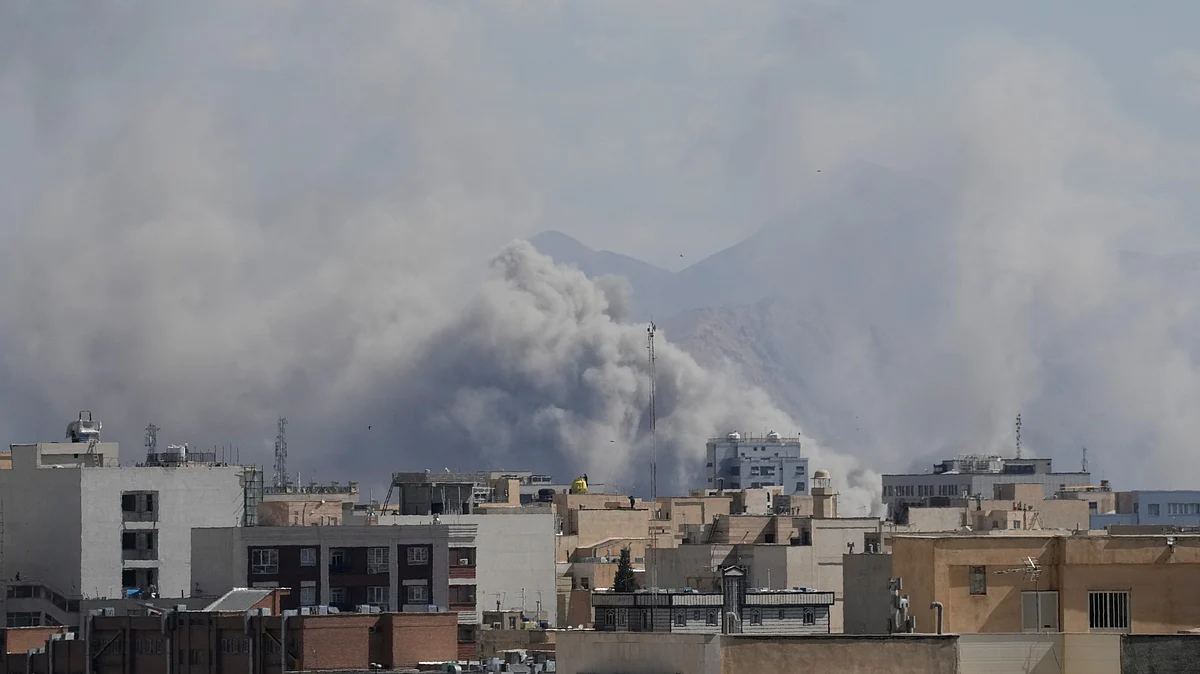
- U.S. Central Command executes precision retaliatory strikes against IRGC radar and missile sites near Qeshm Island.
- Action follows surface-to-air missile fire directed at American surveillance aircraft operating over international waters.
- High-stakes indirect negotiations mediated by Qatar in Doha continue with a 48-hour de-escalation framework under evaluation.
MANAMA, Bahrain & WASHINGTON — United States Central Command (CENTCOM) confirmed Monday that American naval and air forces conducted precision defensive strikes against targeted Iranian military positions near Qeshm Island in the southern Strait of Hormuz. The strikes, authorized by the White House following an emergency National Security Council briefing, were launched in direct retaliation after an Iranian Islamic Revolutionary Guard Corps (IRGC) surface-to-air missile battery opened fire on an American unmanned reconnaissance aircraft conducting routine international airspace patrol operations over the maritime chokepoint.
According to military defense officials speaking on condition of anonymity, American precision-guided ordnance successfully destroyed an air defense radar array and a coastal missile launch station on the perimeter of Qeshm Island without causing civilian casualties or damaging commercial shipping vessels transiting the adjacent navigation channels. The strikes were deliberately calibrated to signal military deterrence while preserving diplomatic off-ramps as intense, indirect negotiations continue across the Persian Gulf in Doha, Qatar.
The military engagement unfolded against a fragile diplomatic backdrop, as Qatari mediators worked around the clock with American and Iranian envoys to finalize a comprehensive de-escalation framework. Diplomatic sources in the region indicated that Iranian officials had presented a preliminary two-day timeline for implementing mutual maritime guarantees and freezing provocative naval maneuvers in international waters. On social media, President Donald Trump signaled cautious openness to a negotiated resolution, stating that a breakthrough "could happen" if Tehran adhered to strict security verification commitments.
Energy markets experienced immediate tremors following reports of the strikes, with global Brent crude and West Texas Intermediate futures fluctuating sharply as commercial tanker operators reassessed transit risks through the Strait of Hormuz, through which roughly twenty percent of the world’s petroleum consumption flows. The United States Fifth Fleet, headquartered in Bahrain, has augmented destroyer patrols and airborne electronic warfare surveillance along the maritime corridor to safeguard commercial shipping convoys against maritime mine threats and drone swarms.
National security analysts warn that the coming 48 hours will test the limits of both military deterrence and high-stakes diplomacy. While Washington has demonstrated its readiness to respond swiftly to hostile acts against American forces, regional allies in the Gulf are pressing both nations to avoid a wider military conflagration that could destabilize global commodity markets and trigger broader regional conflict.
Congressional testimony scheduled for later this month is expected to address cross-agency coordination, focusing specifically on supply chain resiliency, sovereign compute clusters, and long-term capital allocation strategies designed to safeguard domestic competitiveness.