Wall Street Opens Shortened Black Friday Session Focused on Holiday Consumer Spending and AI Retail Bets
Equities traders returned Friday for a shortened 9:30 AM to 1:00 PM ET Wall Street session, testing holiday consumer resilience alongside Big Tech's high-stakes agentic commerce shift across the Nasdaq and NYSE.
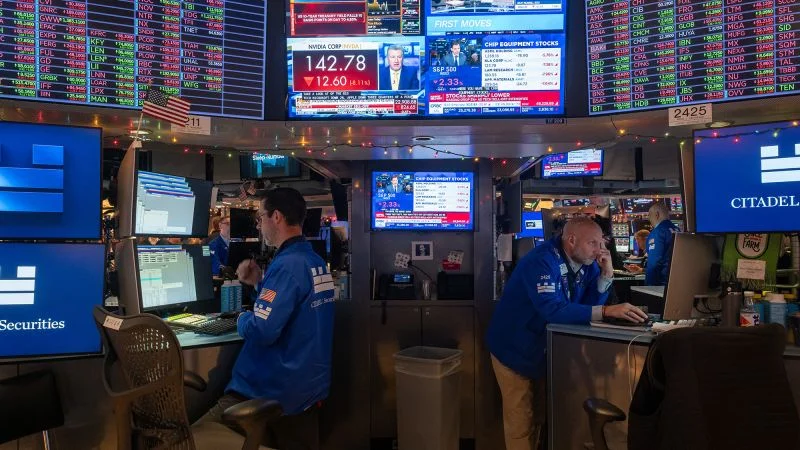
- U.S. stock exchanges opened at 9:30 AM ET for an abbreviated Black Friday session closing early at 1:00 PM ET, with SIFMA bond desks shutting at 2:00 PM ET.
- Portfolio managers are tracking early Black Friday checkout conversion to gauge whether value-conscious households sustain Q4 retail margins.
- Retail-tech attention centers on whether Walmart's Meta Muse gateway and rival AI integrations convert hyperscale AI infrastructure spending into measurable commerce revenue.
Floor brokers and algorithmic desks in Lower Manhattan stepped into an abbreviated Black Friday trading session Friday following Thursday’s Thanksgiving closure, weighing early foot traffic and digital checkout volume for clues about American household spending power heading into the final month of 2026.
Under standard post-Thanksgiving holiday rules, the New York Stock Exchange (NYSE) and Nasdaq opened at 9:30 AM ET for a compressed three-and-a-half-hour cash equities session closing early at 1:00 PM ET, while options markets closed at 1:15 PM ET and U.S. fixed-income bond desks wrapped up at 2:00 PM ET in line with SIFMA guidelines.
Testing Consumer Resilience During 'Black November'
Normally characterized by thinner institutional volume, Friday’s post-Thanksgiving tape drew heightened focus from consumer-discretionary and macro analysts after major chains kept brick-and-mortar doors shuttered on Thanksgiving Day before reopening early Friday morning to weather-disrupted East Coast shoppers and brisk digital demand.
Retail economists note that household purchasing patterns in late 2026 have bifurcated sharply around intentional, value-oriented buying: consumers are utilizing price-tracking software throughout a month-long "Black November" promotional cycle, folding everyday staples alongside seasonal apparel and electronics rather than indulging purely impulsive splurges.
With lingering storm-driven disruptions across parts of the Northeast offsetting strong Sunbelt and Midwest traffic, equity strategists said weekend digital conversion rates between Friday morning and Cyber Monday will prove decisive for fourth-quarter earnings guidance across department-store banners, big-box discounters, and parcel carriers.
Can Agentic AI Justify Nasdaq CapEx Valuations?
For growth-heavy Nasdaq constituents, meanwhile, Black Friday 2026 carries an unprecedented technological catalyst: Wall Street’s first large-scale live read on agentic commerce monetization.
Following months of debate over multi-trillion-dollar tech valuations tied to data-center buildouts, investors are closely watching whether autonomous purchasing layers meaningfully accelerate checkout velocity for retail ecosystems. Walmart’s landmark decision to open a dedicated Agent Gateway allowing Meta’s AI assistant Muse to build carts and transact directly contrasted sharply with Amazon’s strict technical blocks against third-party checkout bots—highlighting an emerging competitive split across big-box and platform valuations. Combined with parallel OpenAI wallet features and Google Gemini merchant partnerships, Friday’s holiday traffic offers portfolio managers concrete evidence on whether conversational AI can transition from ad impressions into durable transaction economics.
Congressional testimony scheduled for later this month is expected to address cross-agency coordination, focusing specifically on supply chain resiliency, sovereign compute clusters, and long-term capital allocation strategies designed to safeguard domestic competitiveness.