Wall Street Braces as SEC Finalizes Stringent Liquidity Mandates for the $1.7 Trillion Private Credit Market
In a sweeping regulatory shift aimed at curbing systemic shadows in the financial system, the SEC approved new liquidity and quarterly disclosure rules for private debt funds operating out of Manhattan financial houses, requiring direct-lending managers to undergo annual independent stress tests and report shadow-bank leverage.
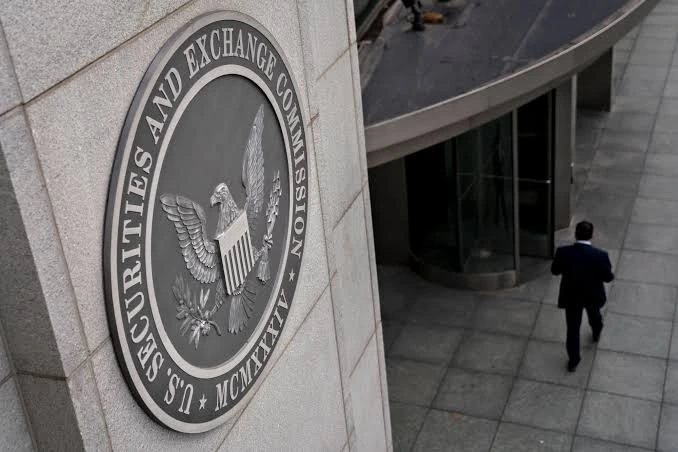
- SEC votes 3-2 to establish quarterly portfolio disclosure mandates for private credit funds exceeding $1.5 billion in assets.
- Managers must reveal internal default metrics, payment-in-kind (PIK) loan percentages, and shadow-bank leverage exposures.
- Direct-lending spreads widen 35 basis points across New York debt trading desks following regulatory announcement.
In a landmark regulatory reckoning for the fastest-growing sector of high finance, the Securities and Exchange Commission approved a comprehensive suite of disclosure, valuation, and liquidity mandates on Thursday, fundamentally transforming how Wall Street’s $1.75 trillion private credit industry operates. The new regulatory framework, approved in a contentious 3-2 commission vote, subjects non-bank direct lenders to unprecedented transparency standards, requiring them to publicly document internal loan valuations, quarterly default rates, and interconnected leverage borrowed from commercial banks.
Over the past decade, private credit has evolved from a niche alternative asset class into an economic colossus, supplanting traditional syndicated bank loans as the primary financing engine for corporate leveraged buyouts, private equity acquisitions, and mid-market enterprise expansion. Operating largely outside the regulatory guardrails imposed on commercial banks after the 2008 global financial crisis, prominent alternative asset managers headquartered in Midtown Manhattan—including Blackstone, Apollo Global Management, Ares Management, and Blue Owl—have amassed hundreds of billions in direct lending capital.
However, escalating concerns from the Federal Reserve, the International Monetary Fund, and the Financial Stability Oversight Council regarding shadow banking opacity and credit contagion prompted the SEC to take decisive action. Under the newly ratified Private Lending Transparency and Stability Framework, private fund managers overseeing more than $1.5 billion in private debt assets must file standardized quarterly reports detailing the performance of every corporate loan on their balance sheets.
Crucially, the rules force direct lenders to break out the percentage of their portfolio returns derived from 'Payment-in-Kind' (PIK) provisions—accounting mechanisms that allow financially distressed corporate borrowers to issue more debt rather than paying interest in cash. Regulatory analysts estimated that PIK modifications have surged by more than 40 percent across the private debt landscape over the past eighteen months, masking deteriorating cash flows among highly leveraged borrowers facing elevated interest rates.
"Private credit has played a critical role in facilitating capital formation for American businesses, but capital formation cannot flourish in the shadows at the expense of systemic market transparency," SEC Chair Gary Gensler stated following the open commission meeting. "When trillions of dollars in non-bank corporate obligations are held in private structures that borrow heavily from federally insured commercial banks, the public and institutional investors have a right to know the true health of those loan assets, the fair-value methodologies employed, and the underlying leverage risks."
The regulatory overhaul also mandates that direct lending funds undergo mandatory annual third-party portfolio stress testing, modeling liquidity demands under severe macroeconomic shocks, including a simultaneous spike in loan defaults and a freeze in warehouse credit lines extended by major investment banks like JPMorgan Chase, Citigroup, and Goldman Sachs.
Wall Street lobbying groups and alternative asset managers reacted with vehement pushback, arguing that the SEC's rules exceed its statutory mandate under the Investment Advisers Act of 1940 and will impair credit access for middle-market American corporations. Representatives for the Managed Funds Association (MFA) and the American Investment Council asserted that private credit performed admirably through recent regional banking stresses precisely because it is financed with locked-up institutional capital rather than demand deposits vulnerable to runs.
"Imposing rigid, one-size-fits-all public bank reporting mandates onto bespoke private institutional contracts will add tremendous friction and compliance overhead to the American financing ecosystem," said Bryan Corbett, President and CEO of the Managed Funds Association. "These rules will needlessly constrain private capital flows to growing companies without providing any tangible benefit to institutional investors who already conduct rigorous due diligence."
Across Manhattan trading desks, the regulatory announcement triggered immediate ripples. Benchmark spreads on new senior secured private loans widened by approximately 35 basis points on Thursday afternoon as direct lenders factored in heightened administrative costs and potential portfolio realignment. Analysts at Morgan Stanley noted that while Tier 1 mega-managers possess the institutional infrastructure to comply, smaller mid-tier debt funds may be forced into mergers or joint ventures to absorb compliance expenditures.
The rule provides an 18-month implementation timeline, with initial Tier 1 mandatory liquidity filings set to commence in the third quarter of 2027.
Congressional testimony scheduled for later this month is expected to address cross-agency coordination, focusing specifically on supply chain resiliency, sovereign compute clusters, and long-term capital allocation strategies designed to safeguard domestic competitiveness.