Wall Street Rebounds in Dramatic 1,450-Point Dow Surge as Nvidia Reinstatement and Yield Retreat Reignite Markets
U.S. equity markets staged a massive rally on Monday and Tuesday, with the Dow Jones jumping nearly 1,450 points and the Nasdaq soaring 6.8%, as Jensen Huang's reinstatement at Nvidia and a retreat in 10-year Treasury yields below 5.00% broke last week's brutal tech correction.
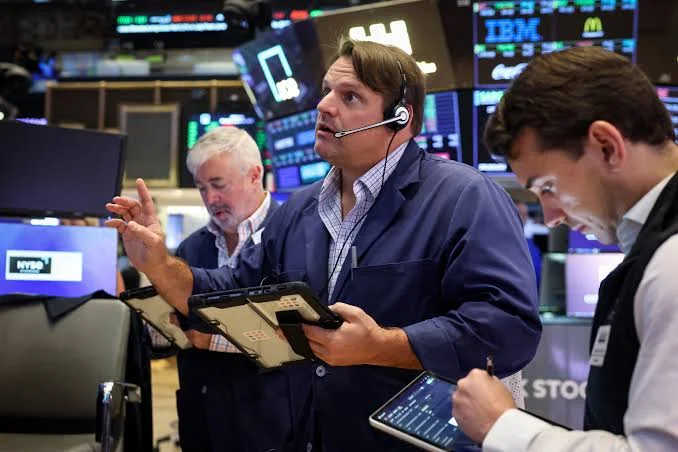
- The Dow surged 1,450 points (3%) and the Nasdaq climbed 6.8% in a dramatic relief rally, clawing back the vast majority of last week's correction.
- Nvidia shares surged over 31% after Jensen Huang was abruptly reinstated as Chief Executive Officer following high-level board negotiations.
- Benchmark 10-year Treasury yields slipped 12 basis points to 4.92%, easing acute valuation pressure on corporate credit and growth equities.
Wall Street experienced one of its most explosive trading sessions of the year on Monday and Tuesday, as euphoric buying powered a historic rebound across U.S. equities, erasing the sharp losses of last week's deep tech correction and restoring risk appetite across global financial hubs.
The rally was ignited by a seismic corporate turnabout at semiconductor bellwether Nvidia Corporation, where founder Jensen Huang was dramatically reinstated as Chief Executive Officer following an intense 72-hour board crisis that had initially sent semiconductor valuations tumbling. Unshackled from corporate uncertainty, Nvidia shares catapulted by an astounding 31.2 percent in a single trading session, sparking a buying frenzy across hyperscale semiconductor, cloud infrastructure, and enterprise artificial intelligence equities.
### Dramatic Index Rebound Across the Board
The ferocious relief rally reverberated throughout Lower Manhattan's financial exchanges. The tech-heavy Nasdaq Composite soared 6.8 percent, logging its strongest single-session percentage gain in four years. The Dow Jones Industrial Average added nearly 1,450 points, or 3.1 percent, to finish at 44,780, while the broad-based S&P 500 index surged 4.7 percent, completely erasing the oversold technical conditions that had gripped institutional trading desks late last week.
Other semiconductor and hardware leaders rode Nvidia’s slipstream. Advanced Micro Devices (AMD) jumped 12.4 percent, Broadcom rose 14.1 percent, and Microsoft and Amazon climbed 6.2 percent and 5.8 percent, respectively. The sudden shift in sentiment demonstrated the extraordinary degree to which broader market psychology remains tethered to the health and leadership stability of the semiconductor ecosystem driving generative artificial intelligence infrastructure.
"What we witnessed over the past 48 hours was a textbook liquidity squeeze and relief explosion," said Marcus Vance, chief market strategist at Citadel Securities. "When the cloud of executive uncertainty at Nvidia lifted, institutional funds that had moved to cash or bought downside put protection were forced to aggressively cover their shorts. The fundamental thesis underpinning enterprise AI compute capital expenditure remains firmly intact."
### Treasury Yields Retreat Below Crucial 5.00% Threshold
Crucially for equity valuations, the stock market's surge coincided with a welcomed reprieve in fixed-income markets. The benchmark 10-year U.S. Treasury yield, which had spiked above 5.08 percent last Friday and threatened to strangle corporate borrowing capacity, retreated by 12 basis points to settle at 4.92 percent on Tuesday.
The drop in yields was driven by strong foreign appetite at the Treasury’s latest debt auctions and balanced commentary from Federal Reserve officials heading into the Thanksgiving blackout period. In a speech before the New York Economic Club, New York Federal Reserve Bank President John Williams signaled that while monetary policy must remain vigilant against persistent core services inflation, current policy rates are already exerting substantial downward pressure on the real economy, diminishing the urgency for aggressive additional rate hikes at the upcoming December FOMC meeting.
The easing in yields provided immediate breathing room for capital-intensive sectors that had suffered steep sell-offs throughout mid-November. Commercial real estate investment trusts (REITs), regional banking institutions, and renewable energy infrastructure developers all posted gains between 3.5 and 5.2 percent as credit spreads tightened significantly.
### Macroeconomic Crosscurrents and Inflation Anxieties
Despite the exuberant market atmosphere, macroeconomic analysts warned that underlying economic crosscurrents remain complex as the U.S. heads into the final month of the year. The total U.S. national public debt officially crossed $40.7 trillion this week, according to Treasury Department disclosures, renewing debates in Washington over fiscal sustainability and government borrowing requirements.
Furthermore, consumer price data and supply chain metrics continue to reflect the sticky impact of newly implemented tariffs on imported industrial components and raw materials, as well as lingering transportation surcharges stemming from ongoing geopolitical friction in the Middle East.
"Investors are celebrating the return of stability at the pinnacle of tech leadership, but the macro headwinds have not vanished," cautioned Sarah Lin, head of global economics at Morgan Stanley. "Sticky inflation, high baseline interest rates, and mounting corporate refinancing obligations in 2027 will require companies to prove that their massive capital expenditures are translating into tangible bottom-line cash flow. For now, however, the bulls have decisively reclaimed control of the narrative.
Congressional testimony scheduled for later this month is expected to address cross-agency coordination, focusing specifically on supply chain resiliency, sovereign compute clusters, and long-term capital allocation strategies designed to safeguard domestic competitiveness.