Why Court Decision on Reporter Records Protects Press Freedom
A landmark federal appellate ruling shielding journalists' confidential telecommunications records from warrantless executive subpoenas delivers a necessary and timely safeguard for investigative journalism.
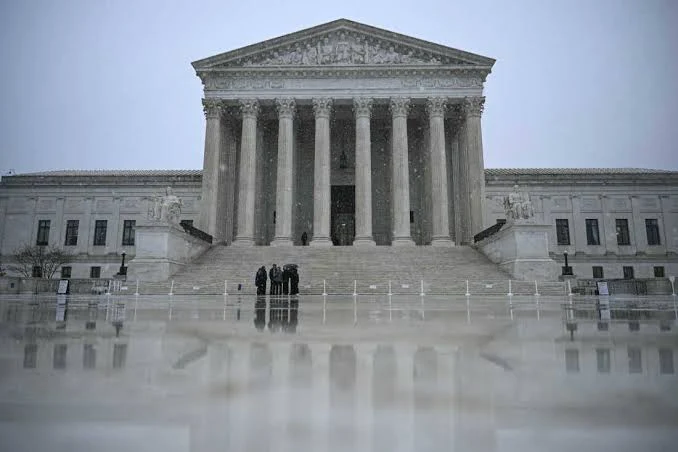
- D.C. Circuit Court of Appeals establishes strict judicial scrutiny before federal agencies can subpoena third-party phone and cloud logs of working journalists.
- Decision repudiates executive overreach that threatened to chill confidential whistleblowers across national security and financial beats.
- The ruling reinforces why robust investigative reporting remains the indispensable immune system of American constitutional democracy.
WASHINGTON — In an era marked by escalating executive hostility toward the Fourth Estate and aggressive federal leak prosecutions, the United States Court of Appeals for the District of Columbia Circuit has delivered a monumental constitutional victory for American democracy. In a unanimous ruling handed down late Monday, a three-judge panel established that federal prosecutors cannot secretly subpoena journalists' third-party phone, email, and digital metadata records without meeting strict judicial scrutiny standards and demonstrating that all alternative investigative remedies have been exhausted.
The appellate court's landmark decision strikes at the very heart of modern investigative reporting. In our hyper-connected digital landscape, a journalist's call logs, encrypted chat metadata, and location pings are functionally equivalent to an unredacted rolodex of confidential whistleblowers, corporate insiders, and public servants who risk their careers and personal freedom to expose corruption. For years, executive agencies exploited statutory loopholes in the Stored Communications Act to bypass direct confrontations with news organizations, opting instead to serve covert subpoenas directly on telecommunications giants and cloud hosting providers.
Writing for the unanimous panel, Judge Patricia Millett articulated a foundational constitutional truth that has grown perilously fragile in recent decades: a free and independent press cannot fulfill its vital institutional role as a watchdog against government abuse if the state possesses unchecked power to monitor a reporter's professional communications. The court properly recognized that the threat of surveillance exerts a catastrophic chilling effect on investigative inquiry, deterring sources with vital public-interest revelations from ever reaching out to the press.
"The First Amendment was not ratified to provide comfort to public officials who seek to insulate their administrative decisions from public scrutiny," Judge Millett wrote in an incisive opinion that will undoubtedly enter the canon of American constitutional jurisprudence. "When the state wields subpoena power to secretly surveil the confidential associations of working journalists, it strikes a blow against the public's right to know and dismantles the very transparency upon which representative self-governance depends."
Predictably, critics within federal law enforcement and national security agencies have pushed back against the ruling, asserting that heightened judicial hurdles will impede legitimate counterintelligence probes and hamper investigations into unauthorized disclosures of classified defense secrets. But this argument fundamentally misapprehends the delicate constitutional balance envisioned by the framers of the Bill of Rights. National security is not preserved by eroding democratic institutions from within; it is strengthened when the press has the institutional autonomy to expose waste, fraud, operational incompetence, and unlawful overreach.
As Congress deliberates federal shield legislation that has languished in legislative limbo for over a decade, the D.C. Circuit's ruling provides an essential judicial backstop against authoritarian overreach. At a time when truth is contested, institutional norms are battered, and investigative journalists face unprecedented legal and technological harassment, this decisive affirmation of First Amendment protections reminds us that a courageous, protected press remains the ultimate immune system of the American republic.
Congressional testimony scheduled for later this month is expected to address cross-agency coordination, focusing specifically on supply chain resiliency, sovereign compute clusters, and long-term capital allocation strategies designed to safeguard domestic competitiveness.