Governor Hochul and Legislative Leaders Unveil Emergency $3.2B Transit Bailout and Subway Safety Accord
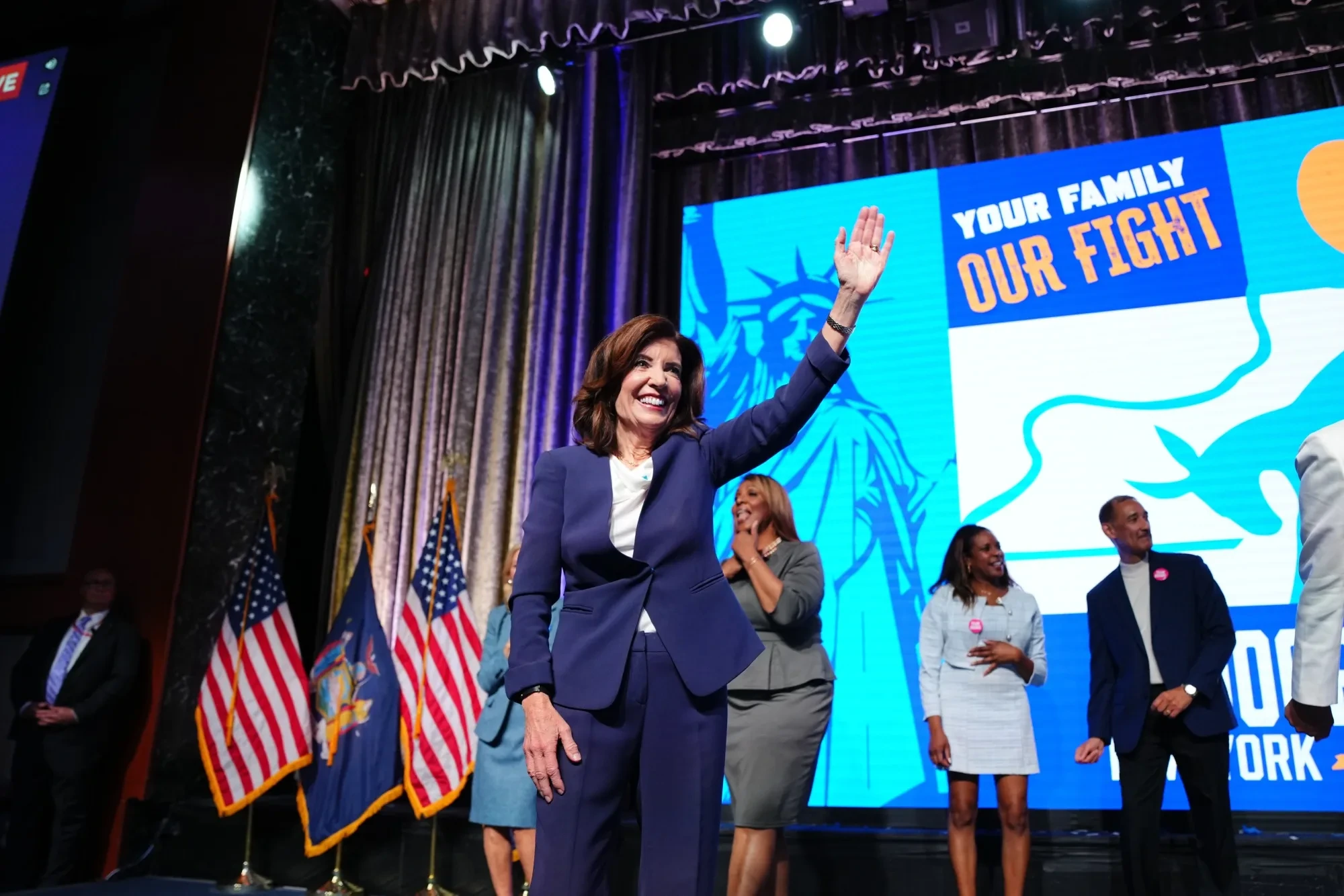
Facing an imminent fiscal cliff and federal funding freezes, Governor Kathy Hochul, Senate Majority Leader Andrea Stewart-Cousins, and Assembly Speaker Carl Heastie announced a bipartisan $3.2 billion state emergency framework to stabilize the MTA, freeze subway fares at $2.90, and deploy 800 additional mental health crisis teams across metropolitan transit hubs.
- $3.2 billion multi-year fiscal pact permanently averts projected MTA operating deficits through 2028.
- Subway and local bus base fares frozen at $2.90, canceling scheduled fare escalations to $3.15.
- Deploys 800 dedicated mental health clinicians and crisis teams across high-traffic transit stations.
In a high-stakes emergency legislative summit at the State Capitol in Albany, Governor Kathy Hochul joined Senate Majority Leader Andrea Stewart-Cousins and Assembly Speaker Carl Heastie on Thursday to unveil a monumental $3.2 billion multi-year transit stabilization and public safety accord. The comprehensive legislative compact permanently eliminates projected operating deficits threatening the Metropolitan Transportation Authority (MTA), freezes baseline subway and local bus fares at $2.90 through at least 2028, and finances the most expansive mental health intervention initiative in the subway system’s 122-year history.
The accord resolves months of bitter backroom wrangling between executive chamber budget analysts and legislative leadership over how to fund the nation's largest commuter rail and rapid transit network in the wake of shifting post-pandemic ridership baselines and federal infrastructure grant freezes in Washington. The agreement circumvents the need for an anticipated fare hike to $3.15 that transit advocates warned would disproportionately punish outer-borough working-class commuters already grappling with regional inflation.
"The lifeblood of New York's economy flows through its train tunnels, bus lanes, and commuter rail tracks," Governor Hochul stated during a joint press briefing inside the Red Room of the Capitol. "We made a solemn promise to 5.5 million daily transit riders that we would not balance the MTA's balance sheet on their backs. Today’s agreement delivers long-term fiscal solvency for our transit systems, locks in fair fares, and commits unprecedented resources to ensure that every New Yorker feels safe, respected, and supported on our subways."
The financial architecture of the $3.2 billion package is powered by a targeted trio of dedicated revenue mechanisms designed to minimize individual commuter burdens. The centerpiece is a statewide 75-cent surcharge on non-essential commercial parcel deliveries dispatched by large e-commerce logistics operators within the 12-county metropolitan commuter transportation district, projected to generate approximately $460 million annually. Additionally, the legislation authorizes a recalibration of the Metropolitan Commuter Transportation Mobility Tax (MCTMT) on top-tier financial service partnerships, combined with $1.4 billion in direct state general fund transfers across the 2026-2028 biennial budget cycles.
Beyond balance sheet stabilization, the accord directs $280 million annually to an expansive public safety and behavioral health initiative dubbed the Comprehensive Transit Outreach and Stabilization Program (CTOSP). Developed in coordination with municipal public health authorities and psychiatric hospital networks, the program funds the permanent deployment of 800 licensed mental health clinicians, psychiatric social workers, and peer specialists into major subway stations, terminals, and overnight train yards.
These multidisciplinary teams will operate 24 hours a day across 65 high-traffic subway hubs—including Times Square-42nd Street, Grand Central, Fulton Center, Atlantic Avenue-Barclays Center, and Jackson Heights-Roosevelt Avenue—conducting clinical evaluations, delivering direct medical stabilization, and coordinating direct placements into specialized supportive housing and inpatient psychiatric beds, bypassing standard overcrowded hospital emergency rooms.
"This is not about criminalizing vulnerability; it is about addressing deep-seated human suffering with medical competence, compassion, and professional care right where people are struggling," emphasized Senate Majority Leader Andrea Stewart-Cousins. "For too long, transit workers and riders have been forced to bear the brunt of a broken mental health infrastructure. With this legislation, we are giving clinicians the tools and dedicated funding needed to transform subway safety from the ground up."
The transit workers' union, Transport Workers Union (TWU) Local 100, which represents more than 40,000 subway and bus employees, voiced full support for the agreement. TWU leadership particularly praised provisions establishing accelerated installation schedules for full-height platform safety gates at 16 priority express transfer stations, alongside enhanced legal protections and rapid-response panic alarms for station booth personnel and train operators.
Suburban lawmakers from Nassau, Suffolk, and Westchester counties, who initially balked at regional tax increases, consented to the final compromise after securing guaranteed parity provisions for the Long Island Rail Road (LIRR) and Metro-North Railroad. The suburban package includes $420 million for commuter rail signal modernizations, station accessibility upgrades, and fare discounts for off-peak inter-county commuters.
With both legislative chambers poised to hold formal ratification votes during an extraordinary legislative session early next week, state fiscal watchdogs at the Citizens Budget Commission noted that while the new recurring revenues represent a responsible bridge through 2028, the MTA must continue aggressive internal operational streamlining to protect its $68 billion 2025-2029 capital plan from macroeconomic headwinds.
Congressional testimony scheduled for later this month is expected to address cross-agency coordination, focusing specifically on supply chain resiliency, sovereign compute clusters, and long-term capital allocation strategies designed to safeguard domestic competitiveness.