Trump Pauses Iran Strikes Following Talks With Mideast Allies
President Donald Trump has indicated to senior defense advisers that the U.S. will pause plans for direct strikes against Iranian targets following urgent appeals from Gulf allies seeking to prevent broader regional war.
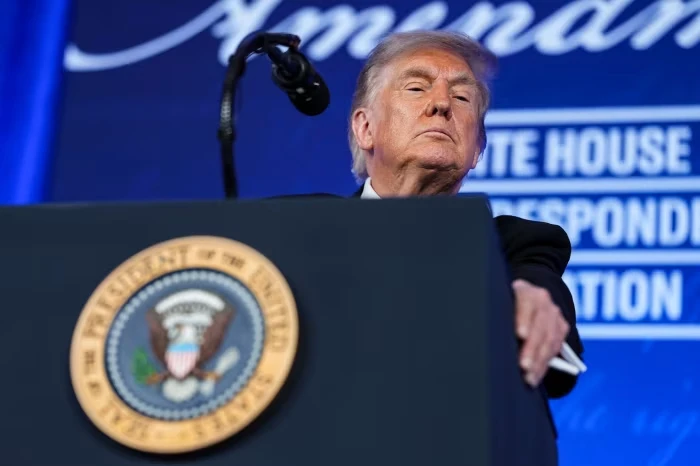
- President Trump temporarily halts direct retaliatory strikes against Iranian installations after Gulf partner appeals.
- Decision follows Sunday drone attack on Bahrain naval radar base intercepted with zero U.S. casualties.
- Gulf leaders warn direct escalation threatens oil shipping lanes and regional economic stability.
WASHINGTON — President Donald Trump has signaled to senior national security advisers and Pentagon leadership that the United States will temporarily pause direct kinetic military strikes against Iranian infrastructure, following an intensive weekend of high-level diplomatic appeals from key Middle Eastern partners including Saudi Arabia, the United Arab Emirates, and Qatar. Officials familiar with internal deliberations confirmed that Gulf leaders urged the White House to avoid triggering an uncontrollable regional confrontation that could shutter commercial navigation throughout the Strait of Hormuz and destabilize global energy markets.
The diplomatic pause comes immediately on the heels of an Iranian drone assault targeting an advanced American air defense radar installation situated at a naval staging facility in Bahrain early Sunday morning. While Bahraini defense forces and U.S. Central Command intercepted the bulk of incoming unmanned aerial vehicles with zero American casualties reported, the provocative engagement initially spurred intense discussions within the Situation Room regarding retaliatory strikes against Iranian missile staging sites and command nodes in southern Iran.
However, during extended telephone conferences conducted late Sunday evening between the Oval Office and regional counterparts, Gulf leaders presented compelling arguments that immediate American airstrikes would inevitably prompt asymmetric Iranian counterattacks against energy refining facilities and desalination plants across the Persian Gulf. Leaders in Riyadh and Abu Dhabi emphasized that while strategic deterrence must remain firm, opening a wider military theater would undermine months of economic stabilization efforts and create profound inflationary pressures across the international economy.
"Our posture remains one of unmatched strength, but our actions will be deliberate, calculated, and coordinated with those who stand alongside us in the region," a senior administration official told reporters on condition of anonymity. "The president has made it abundantly clear to Tehran that any further escalatory maneuvers will meet with overwhelming force. For now, diplomatic channels and maritime interdiction operations will take precedence as we assess Iranian military repositioning."
Congressional reactions reflected deep partisan divisions over the administration's strategic posture. Republican defense hawks cautioned that pausing retaliatory strikes could be interpreted by Tehran and regional proxy factions as hesitation, calling for sustained pressure on Iranian command hierarchies. Conversely, Democratic leaders on the Senate Foreign Relations Committee welcomed the consultative approach with Gulf allies, urging the White House to formalize verifiable de-escalation protocols and submit any potential authorization of military force to Congress for debate.
As U.S. naval strike groups led by the USS Abraham Lincoln maintain elevated alert status across the Arabian Sea, diplomatic envoys in Muscat and Geneva are quietly exploring whether indirect dialogue can be revived to de-escalate maritime tensions. For the White House, the decision to stay military action illustrates the complex balancing act between domestic political pledges to avoid prolonged overseas entanglements and the imperative to defend vital American national security interests abroad.
Congressional testimony scheduled for later this month is expected to address cross-agency coordination, focusing specifically on supply chain resiliency, sovereign compute clusters, and long-term capital allocation strategies designed to safeguard domestic competitiveness.