House Judiciary Democrats Broaden Investigation Into Donald Trump Jr.’s 1789 Capital Venture Fund, Subpoenaing Four Firms
Incoming House Judiciary Chair Jamie Raskin dramatically expanded congressional scrutiny of 1789 Capital on Tuesday, demanding two years of communications and investment records from four portfolio companies amid mounting friction with the White House over executive privilege.
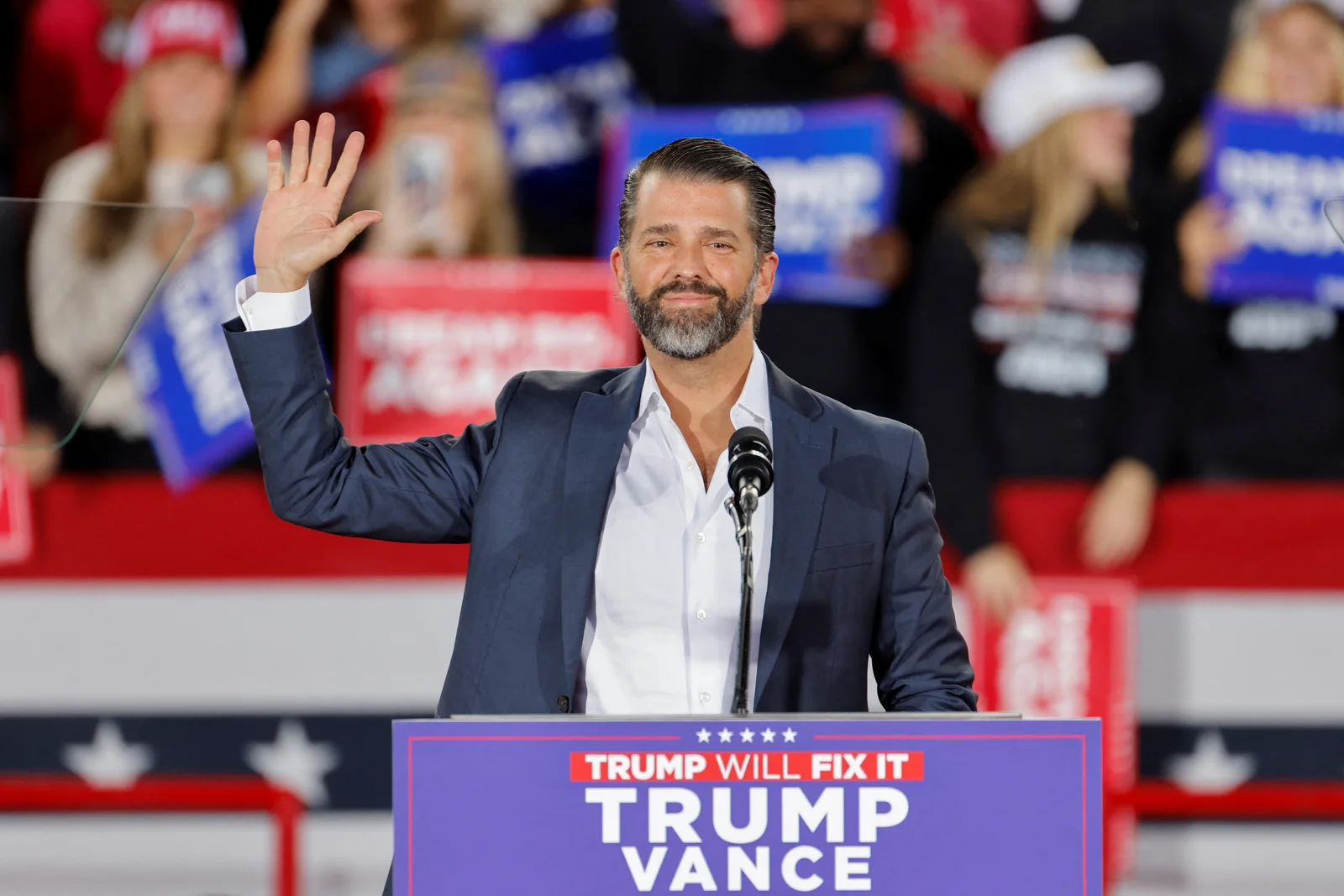
- Rep. Jamie Raskin sent sweeping investigative letters to Hadrian Automation, Juul Labs, Polymarket, and GrabAGun demanding two years of investor records.
- Lawmakers are probing whether 1789 Capital leveraged proximity to federal policy decisions and regulatory approvals to boost portfolio company valuations.
- The White House has countered with Executive Order 14438, directing federal contractors to clear congressional oversight responses through executive privilege reviews.
Setting the stage for an explosive constitutional confrontation in the upcoming 120th Congress, House Judiciary Committee Ranking Member and incoming Chairman Rep. Jamie Raskin dramatically widened an active congressional inquiry on Tuesday into 1789 Capital, the high-profile venture capital fund partnered with Donald Trump Jr.
In formal oversight letters dispatched Tuesday morning, House Judiciary investigators demanded two full years of internal communications, valuation memoranda, due-diligence files, and lobbying logs from four prominent firms tied to the venture fund: precision defense manufacturer Hadrian Automation, e-cigarette maker Juul Labs, prediction-market platform Polymarket, and online firearms retailer GrabAGun.
Probing the Intersection of Venture Capital and Federal Power
The expanded probe marks the Democratic majority-in-waiting’s most pointed opening salvo ahead of January’s gavel transfer, signaling that regulatory intersections between the White House inner circle and private capital markets will dominate Capitol Hill’s investigative calendar in 2027.
According to committee staff memoranda accompanying the document requests, lawmakers are examining whether executives connected to 1789 Capital—which raised hundreds of millions of dollars from institutional and foreign-linked backers following the 2024 election—anticipated, discussed, or benefited from non-public federal regulatory decisions, defense procurement awards, or Commodity Futures Trading Commission (CFTC) enforcement shifts.
"The American people have a fundamental right to know whether federal regulatory power, Pentagon contracting dollars, and executive enforcement discretion are being quietly monetized through private investment vehicles tied directly to the President's immediate family," Rep. Raskin stated on Capitol Hill. "Every portfolio firm receiving government favors or sudden regulatory clearances owes Congress complete transparency into how those deals were structured."
Representatives for both Donald Trump Jr. and 1789 Capital forcefully rejected the committee's framing, characterizing the document demands as a partisan fishing expedition orchestrated in retaliation for November's midterm results. In a brief statement, a spokesperson for 1789 Capital insisted that every investment made by the firm followed standard private-market fiduciary protocols without preferential federal intervention.
White House Counters With Executive Order 14438 and DOJ Warnings
The widening House probe comes amid an unprecedented counter-offensive from the White House and the Department of Justice aimed at blunting incoming Democratic subpoena power before lawmakers formally convene in January.
Earlier this week, the White House issued Executive Order 14438, an extraordinary directive instructing private federal defense and technology contractors that any corporate responses to congressional subpoenas or committee oversight inquiries involving administration communications must first undergo mandatory executive-privilege clearance through White House Counsel, backed by the explicit threat of federal contract termination for unauthorized disclosures.
Simultaneously, senior Justice Department officials and federal prosecutors in Texas escalated rhetorical pressure on congressional investigators, pointing to 18 U.S.C. Section 241—the federal civil rights statute prohibiting conspiracies to deprive citizens of constitutional rights—and warning Democratic senators and representatives that "politically motivated investigations targeting administration allies" could themselves invite federal prosecutorial scrutiny.
A High-Stakes Showdown Over Subpoena Compliance
Constitutional scholars across the ideological spectrum expressed astonishment at the escalating standoff, noting that ordering private government contractors—including firms like Hadrian Automation—to route congressional oversight replies through the West Wing sets up an immediate judicial showdown in federal district court.
"Attempting to weaponize procurement rules and criminal civil rights statutes to chill routine Article I oversight of venture-backed defense contractors is legally unprecedented," said Maya Goldstein, director of congressional oversight studies at Georgetown University Law Center. "The moment the new House convenes and issues binding subpoenas, federal judges will be forced to adjudicate whether Executive Order 14438 can shield private corporations from testifying before Congress."
With December's lame-duck session already overshadowed by budget negotiations and scheduled technology hearings, Tuesday’s letters guarantee that the battle over 1789 Capital will serve as the opening flashpoint of Washington's divided government.
Congressional testimony scheduled for later this month is expected to address cross-agency coordination, focusing specifically on supply chain resiliency, sovereign compute clusters, and long-term capital allocation strategies designed to safeguard domestic competitiveness.