Trump Defends Nvidia CEO Jensen Huang Amid Bipartisan Scrutiny Over DOJ Security Review Gaps
President Donald Trump and Attorney General Todd Blanche defended Nvidia CEO Jensen Huang's reinstatement as bipartisan lawmakers and House Judiciary Democrats questioned what formal national security clearance the Justice Department actually conducted.
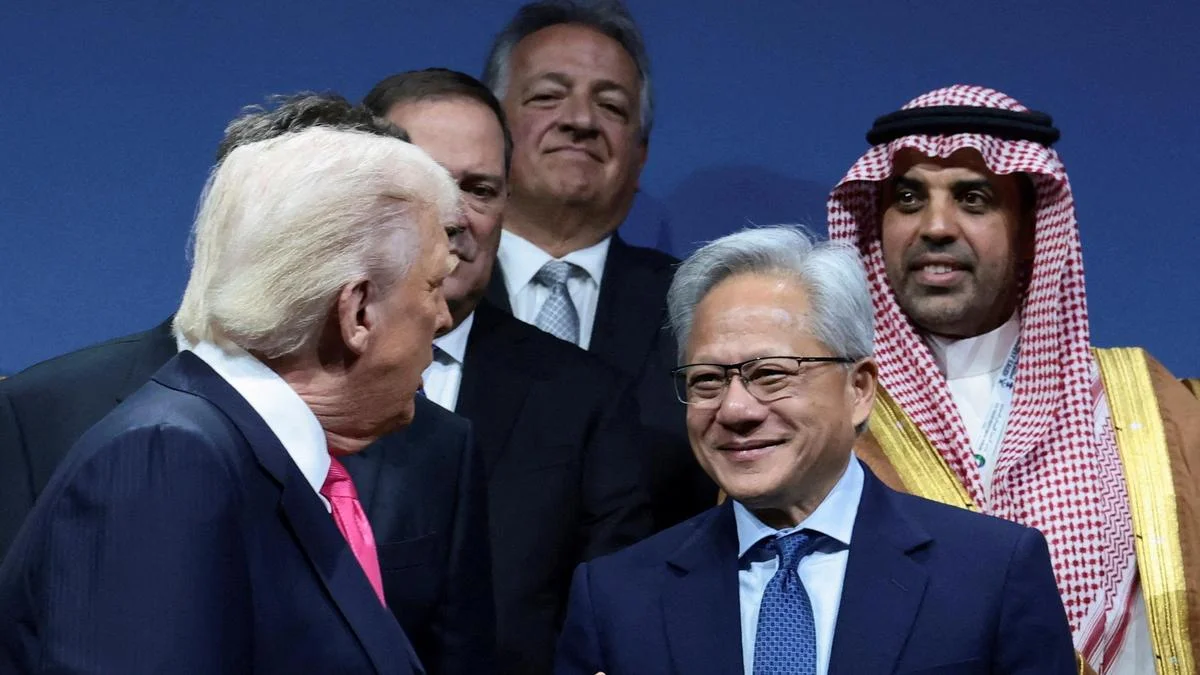
- President Trump stood behind Nvidia CEO Jensen Huang's November 23 board reinstatement, declaring his return posed no national security risk based on 'a lot of information.'
- Attorney General Todd Blanche cited a 'collective consensus' among security agencies while facing pointed press questioning over whether Huang himself underwent a formal clearance review.
- Reports that Secretary of State Marco Rubio briefed the White House months earlier intensified House Judiciary Committee demands for transparency on AI export-control investigations.
President Donald Trump doubled down this week in defense of reinstated Nvidia CEO Jensen Huang, telling reporters that his administration’s judgment clearing the Silicon Valley chief executive of national security jeopardy rests on "a lot of information"—even as bipartisan lawmakers and senior Department of Justice (DOJ) correspondents pressed officials over gaps in the underlying vetting record.
The political firestorm escalated after Nvidia’s board abruptly returned Huang to the corner office on November 23, 2026, weeks after his sudden departure following disclosures surrounding extramarital relationships—most prominently with Alice Huang, an executive at Singapore-based firm Megaspeed whom U.S. intelligence assessments linked to suspected Chinese intelligence ties and illicit advanced AI chip diversion probes.
Attorney General Todd Blanche Faces Intense Questioning
Immediately following Huang’s reinstatement, President Trump posted and stated publicly that the federal government had "no reason to believe that Jensen's return to NVIDIA poses any risk to National Security," while asserting that Attorney General Todd Blanche had found no evidence of unlawful conduct by the chief executive.
During a tense Justice Department news conference this week, however, Blanche encountered sharp questioning from reporters demanding clarity on which agencies participated in a formal security review—and whether any comprehensive counterintelligence inquiry into Huang personally had actually concluded.
Blanche insisted that the Justice Department reached a "collective consensus" alongside partner national security agencies clearing Huang of direct criminal target status. At the same time, critics noted that Blanche sidestepped specifics about individual vetting timelines, emphasizing instead that DOJ prosecutors continue running broader export-control enforcement investigations into third-party intermediaries—including Megaspeed and hardware partners such as Super Micro Computer—suspected of routing restricted high-performance accelerators toward China.
Congressional Oversight and Prior White House Briefings
Fresh reporting by The New York Times added fuel to Capitol Hill criticism by revealing that Secretary of State Marco Rubio had briefed White House officials on sensitive intelligence surrounding the affair months before November’s board shakeup.
Democrats on the House Judiciary Committee, joined by skeptical national-security hawks in both parties, questioned why senior officials apparently compartmentalized warning signs while giving markets and Nvidia’s board swift public absolution of America’s dominant AI semiconductor supplier.
"When frontier AI compute sits at the exact center of U.S. defense readiness and export-control enforcement, Congress deserves written documentation—not off-the-cuff assurances—showing how Justice and intelligence agencies vetted ongoing diversion risks," a senior committee aide said Thursday. Administration allies countered that maintaining American semiconductor leadership against foreign rivals required stabilizing Nvidia’s engineering leadership once prosecutors confirmed no personal charges were pending.
Congressional testimony scheduled for later this month is expected to address cross-agency coordination, focusing specifically on supply chain resiliency, sovereign compute clusters, and long-term capital allocation strategies designed to safeguard domestic competitiveness.