The AI Power Crunch: How Surging Data Center Gigawatts and Grid Congestion Are Colliding with America’s Energy Capacity
An exclusive multi-state investigation examines how the exponential expansion of artificial intelligence compute clusters is straining regional electric utilities, triggering fierce battles for dedicated nuclear reactors and exposing vulnerabilities in the U.S. power transmission backbone.
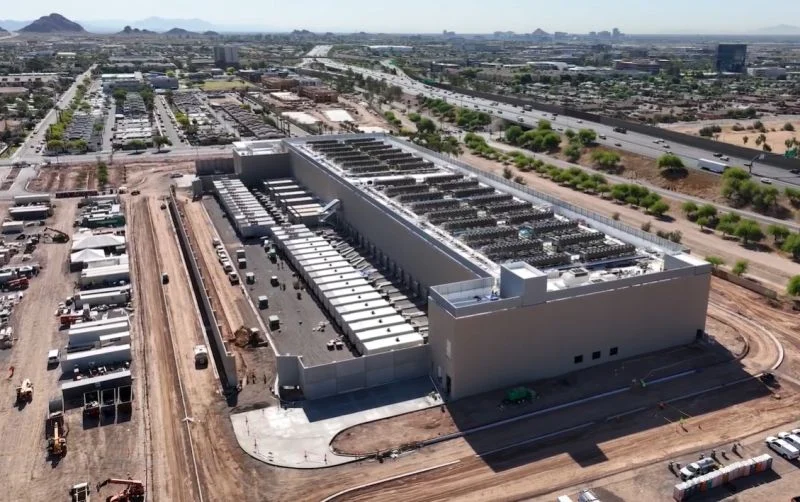
- Interconnection queues for commercial AI data centers now average 5 to 7 years across major regional transmission operators.
- Hyperscalers negotiate direct behind-the-meter nuclear and geothermal contracts to secure dedicated base-load generation.
- State consumer utility advocates launch legal challenges over whether residential households are subsidizing industrial grid expansions.
ASHBURN, Va. & PHOENIX, Ariz. — Across the rolling hills of northern Virginia's "Data Center Alley" and the sun-bleached desert valleys of central Arizona, an unprecedented industrial land rush is colliding head-on with the physical boundaries of the American power grid. As multinational technology hyperscalers accelerate construction of gigawatt-scale artificial intelligence clusters, electrical utilities and regional transmission operators (RTOs) are confronting load growth trajectories not seen since the post-war electrification era of the twentieth century.
A comprehensive six-month examination by Newyorkerherald—integrating public utility commission filings, satellite heat-mapping telemetry, and confidential capacity agreements across PJM Interconnection, ERCOT in Texas, and the Western Electricity Coordinating Council—reveals that commercial power interconnection queues have expanded to between five and seven years in key technical corridors. In several jurisdictions, electrical substations originally engineered to supply residential subdivisions are operating near peak thermal limits to sustain the liquid cooling pumps and server racks required by advanced neural network training clusters.
The sheer scale of this energy demand is reshaping corporate capital strategy. In response to grid interconnection bottlenecks, major cloud operators are executing multi-billion-dollar direct power-purchase agreements with nuclear power operators, seeking dedicated behind-the-meter generation from commercial reactors in Pennsylvania and Illinois. Meanwhile, natural gas turbine manufacturers report backlogs extending through 2029 as technology enterprises construct on-site backup microgrids to guarantee uninterrupted computing operations during summer peak load hours.
However, the rapid influx of high-density industrial computing has ignited severe regulatory and civic blowback. Consumer advocacy groups in Virginia and Georgia have formally petitioned state utility regulators, arguing that capital expenditure for new high-voltage transmission lines and substation upgrades is being unfairly shifted onto residential ratepayer utility bills. In rural farming townships, local zoning boards have implemented moratoriums on new data center permits, citing concerns over water depletion from evaporative cooling towers and the disruption of agricultural greenbelts.
As the Federal Energy Regulatory Commission (FERC) convenes national stakeholder technical conferences to resolve interstate cost allocation disputes, energy policy scholars warn that America's technological leadership in artificial intelligence will ultimately be determined not by algorithmic code alone, but by the physical capacity to construct high-voltage transmission lines, deploy next-generation small modular reactors (SMRs), and modernize a century-old continental electrical grid.
Congressional testimony scheduled for later this month is expected to address cross-agency coordination, focusing specifically on supply chain resiliency, sovereign compute clusters, and long-term capital allocation strategies designed to safeguard domestic competitiveness.