Why Moving Cabinet Chiefs to Military Bases Sets a Bad Precedent
Relocating civilian cabinet secretaries to guarded military installations amid foreign threats may seem like prudent security, but it risks blurring the vital constitutional line between civilian governance and the armed forces.
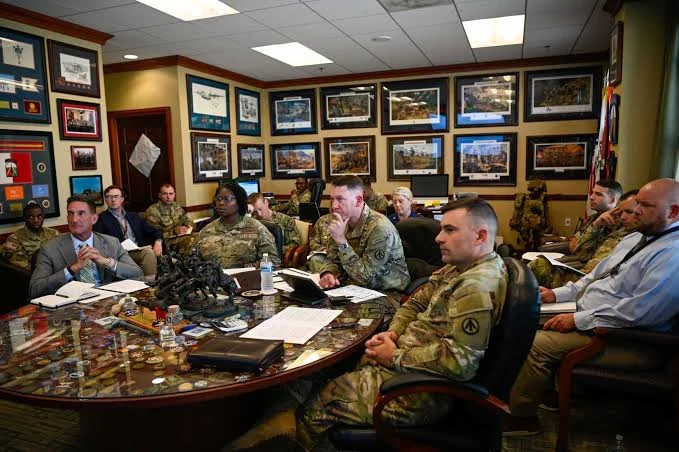
- Relocating civilian cabinet heads to military bases blurs the vital constitutional line between civilian and military power.
- Insulating civilian leaders behind military checkpoints undermines public access, press transparency, and democratic norms.
- Congress must assert rigorous oversight to prevent the normalization of a bunkerized garrison state.
WASHINGTON — The news that United States Treasury Secretary Scott Bessent has been evacuated from his private residence to a secure military installation—joining Secretary of State Marco Rubio and senior White House aides behind barbed wire and armed military checkpoints—should send a chill down the spine of every American who cherishes constitutional democracy. While the physical safety of public servants confronting legitimate foreign assassination conspiracies is non-negotiable, the institutional normalization of civilian governance operating from military garrisons sets a profoundly dangerous and corrosive precedent for the American republic.
For nearly two and a half centuries, the United States has stood as a beacon of democratic resilience precisely because its civilian leaders operate openly among the citizens they represent. The principle of civilian supremacy over the military, enshrined by the framers in the Constitution and fiercely defended through world wars and domestic crises, relies not merely on statutory legal doctrines, but on the visible, daily reality of civilian governance remaining distinct, accessible, and accountable. When the officials responsible for managing national taxation, foreign diplomacy, and executive policy retreat into military fortresses, the symbolic and operational architecture of the republic begins to resemble an embattled garrison state.
The immediate justification offered by the administration is, of course, protective necessity. In an era where hostile foreign regimes and proxy networks utilize digital surveillance, transnational criminal cartels, and loitering munitions to reach onto American soil, the threat matrix confronting public servants is undeniably severe. Federal law enforcement agencies have an absolute obligation to deploy maximum protective resources, including around-the-clock Secret Service details, armored transport, and counter-surveillance operations. But these security measures must be executed through civilian federal law enforcement—not by transforming active-duty military bases into permanent administrative enclaves for political appointees.
The operational hazards of this militarized retreat are far from theoretical. Operating behind military perimeter security insulates political leaders from public scrutiny, legislative oversight, and the essential friction of democratic accountability. Press access becomes severely restricted by military security classifications; whistleblowers within civil departments are deterred by base entry checkpoints; and the institutional culture of civilian departments risks becoming subordinated to military operational hierarchies. Furthermore, it projects an image of profound systemic weakness to foreign adversaries, signaling that the world's preeminent superpower cannot safeguard its highest officials without resorting to domestic military sequestration.
History offers stark warnings regarding what happens when civilian governance becomes physically and culturally entwined with the armed forces. Republics do not typically succumb to sudden, dramatic military coups; they erode incrementally when civilian institutions abdicate their independence, normalize military intervention in domestic affairs, and prioritize bunkerized security over open democratic engagement.
Congress must not remain a silent bystander to this accelerating militarization. The House and Senate Armed Services and Judiciary Committees must demand immediate, transparent oversight into the statutory authorizations, funding streams, and duration of these military housing arrangements. Protecting the lives of our nation's leaders is essential; but protecting the constitutional soul of the American republic from creeping militarism is an obligation that transcends any individual public servant.
Congressional testimony scheduled for later this month is expected to address cross-agency coordination, focusing specifically on supply chain resiliency, sovereign compute clusters, and long-term capital allocation strategies designed to safeguard domestic competitiveness.