Why Sending JD Vance to Police Blue Cities Endangers Federalism
The White House directive dispatching Vice President JD Vance to oversee law enforcement in Democratic-led cities weaponizes federal executive authority and threatens the bedrock constitutional principle of local governance.
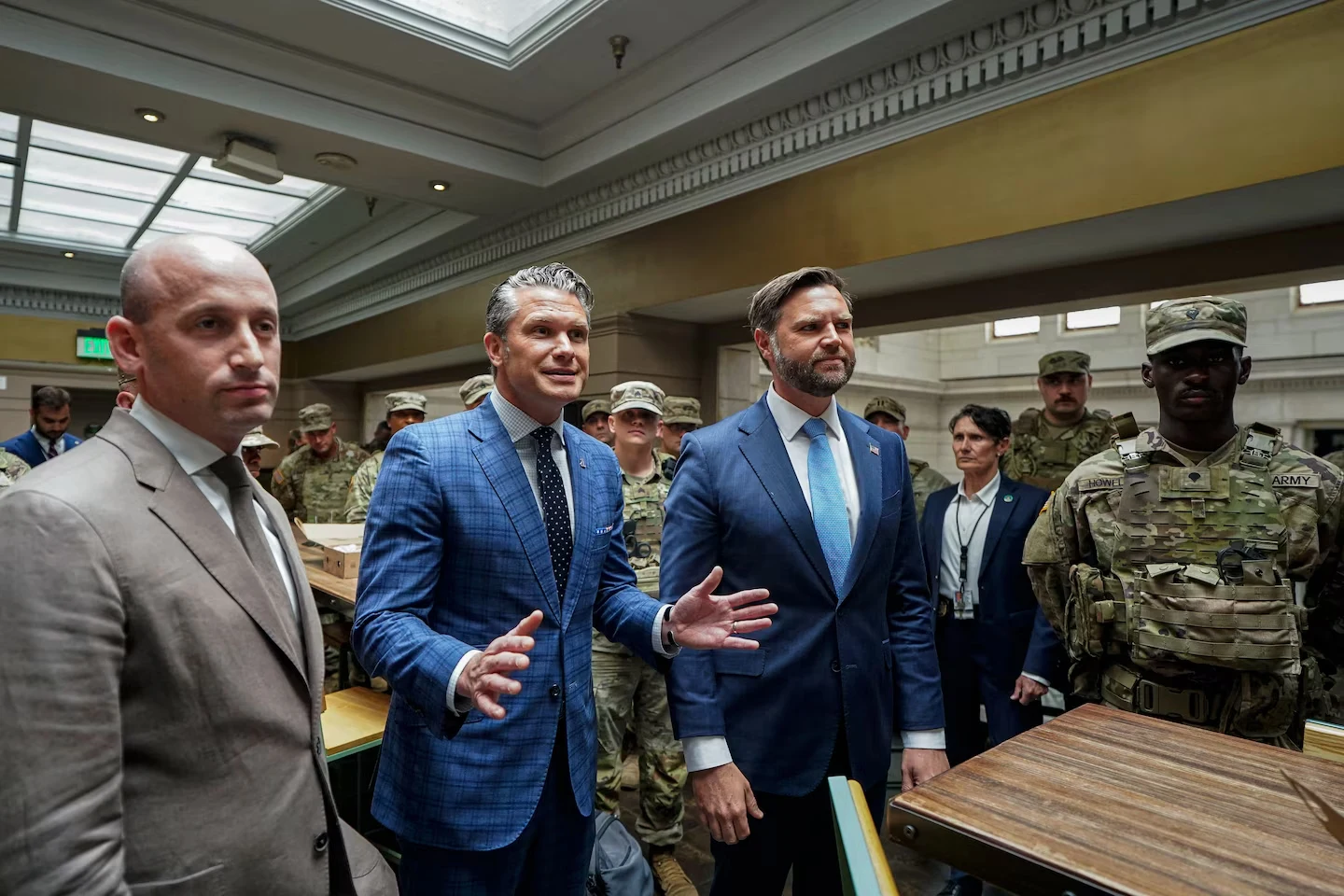
- Dispatching the vice president to police Democratic cities flagrantly violates Tenth Amendment federalism.
- Selective federal intervention in blue municipalities politicizes law enforcement and erodes community trust.
- Congress and federal courts must check executive attempts to usurp local policing and municipal sovereignty.
WASHINGTON — The announcement that President Donald Trump has officially terminated diplomatic negotiations with Iran to reassign Vice President JD Vance to direct a federal crackdown on municipal crime in Democratic-led cities is more than an abrupt policy detour; it represents a dangerous and unconstitutional assault on the architecture of American federalism. By deploying the office of the vice presidency as a political overseer tasked with intervening in local municipal governance, the administration is eroding the vital boundary separating federal authority from sovereign state and municipal policing powers.
The Tenth Amendment of the United States Constitution is neither ambiguous nor optional. In reserving to the states and the people all powers not explicitly delegated to the national government, the framers deliberately withheld general police powers from the federal executive. The management of municipal police forces, local prosecutorial discretion, and urban public safety administration have resided with locally elected mayors, city councils, and district attorneys for nearly two and a half centuries. This decentralized structure was intentionally designed to prevent an authoritarian national executive from transforming federal law enforcement into an instrument of domestic political coercion.
Yet the administration's new directive makes no secret of its partisan animus. In explicitly singling out major metropolitan centers governed by Democratic mayors—such as Chicago, Philadelphia, and Los Angeles—for aggressive federal task force intervention while ignoring violent crime spikes in rural, conservative jurisdictions, the White House is using the federal justice apparatus not as an impartial guardian of public order, but as a partisan cudgel designed to punish political opponents and establish executive dominion over urban populations.
The operational consequences of this politicized policing crusade are profoundly destabilizing. Effective crime reduction relies fundamentally on deep, hard-won trust between neighborhood residents and local community police officers. When federal task forces descend on municipal precincts with antagonistic political rhetoric and heavy-handed executive mandates, that fragile community trust is instantly shattered. Local law enforcement leaders are placed in an untenable constitutional bind, caught between their statutory oaths to municipal charters and aggressive executive pressure from Washington.
Furthermore, diverting senior national leadership away from critical geopolitical flashpoints in the Middle East to engage in domestic political grandstanding represents a reckless abdication of global responsibility. Confronting sophisticated state-sponsored cyber warfare, maritime supply disruptions, and regional conflicts demands the undivided strategic focus of the executive branch. Treating serious domestic crime challenges as fodder for campaign-style rallies and retaliatory task forces diminishes the dignity of the vice presidency and trivializes the genuine safety needs of urban citizens.
The American republic is fortified by the vibrant diversity and self-determination of its local communities. When a president claims unilateral authority to override municipal sovereignty and dispatch political lieutenants to police ideological rivals, the foundational balance of our constitutional order is imperiled. Congress, the federal judiciary, and municipal leaders nationwide must stand firm against this executive overreach, reaffirming that public safety is achieved through democratic cooperation and local accountability—not through executive intimidation.
Congressional testimony scheduled for later this month is expected to address cross-agency coordination, focusing specifically on supply chain resiliency, sovereign compute clusters, and long-term capital allocation strategies designed to safeguard domestic competitiveness.