DeepMind NeuralGCM and NASA AI Atmospheric Models Sharpen Coastal Storm Forecasting Ahead of Holiday Travel
As coastal storm alerts sweep across New York and the Northeast ahead of Thanksgiving travel, meteorological agencies are pairing Google DeepMind’s NeuralGCM and NASA’s Prithvi weather foundation models with quantum Earth-observation research to capture rapid storm intensification.
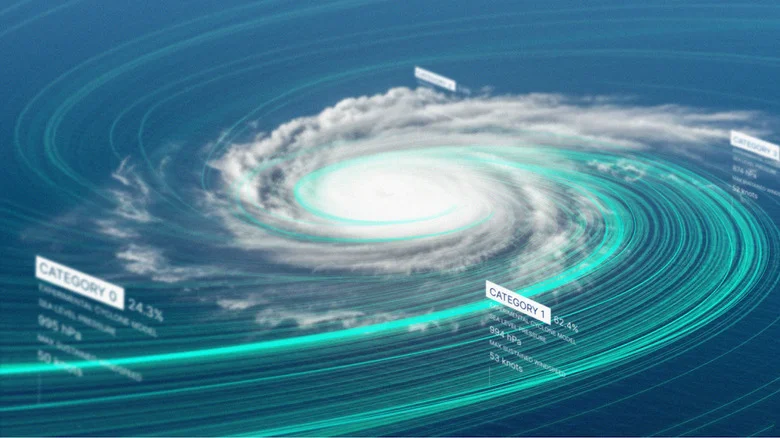
- Ahead of forecasted pre-Thanksgiving coastal storm impacts across New York, meteorologists are testing hybrid physics-AI models including Google DeepMind's NeuralGCM and NASA/IBM's Prithvi.
- By fusing traditional Navier-Stokes atmospheric physics with machine learning corrections, NeuralGCM generates 15-day ensemble storm tracks orders of magnitude faster than supercomputers.
- NASA's Earth Science Division is concurrently advancing space-based quantum gravity gradiometry and atom interferometry to track ocean-heat anomalies fueling coastal storms.
As Governor Kathy Hochul placed New York’s emergency operations teams on heightened readiness ahead of a fast-moving coastal storm system threatening Thanksgiving holiday travel corridors across the Northeast, atmospheric scientists are spotlighting a generational leap in how supercomputers forecast extreme weather.
Inside national meteorological labs and university climate institutes this week, researchers are actively validating hybrid artificial intelligence atmospheric frameworks—led by Google DeepMind’s NeuralGCM and NASA and IBM’s Prithvi weather-climate foundation model—capable of projecting complex coastal moisture plumes, rapid barometric drops, and localized precipitation bands with dramatically sharper lead times.
Fusing Classical Physics With Machine Learning Corrections
For more than half a century, operational weather forecasting has relied on General Circulation Models (GCMs) that slice Earth’s atmosphere into rigid three-dimensional grids and numerically solve fluid-dynamics equations across massive supercomputers. Because computing costs explode when grid spacing shrinks, classical models have long struggled to capture small-scale physical phenomena—such as cloud microphysics, convective updrafts, and localized coastal wind shear—frequently missing rapid storm intensification along the Atlantic seaboard.
Google DeepMind’s NeuralGCM bridges that decades-old computational gap by preserving a differentiable, classical physics core for large-scale atmospheric motion while replacing crude empirical approximations with trained neural networks that learn micro-scale dynamics directly from forty years of global satellite and weather-balloon reanalysis data.
"Traditional numerical models require hours on massive CPU clusters to run a single high-resolution ensemble suite, forcing forecasters to trade spatial detail for speed," explained Dr. Claire Lindqvist, an atmospheric dynamics researcher collaborating with Northeast climate centers. "Hybrid physics-ML architectures like NeuralGCM generate hundreds of calibrated storm-track simulations in minutes, allowing emergency planners in cities like New York and Boston to quantify coastal flooding and highway icing probabilities far earlier."
NASA’s Prithvi and Quantum Earth Observation Horizon
Running alongside DeepMind’s atmospheric solver, NASA and IBM’s open-source Prithvi foundation models are transforming satellite imagery interpretation during volatile transitional weather seasons. Trained on petabytes of multi-spectral NASA Earth observation archives, Prithvi rapidly translates raw orbital infrared and microwave sensor feeds into high-resolution maps of soil saturation, urban heat gradients, and atmospheric river trajectories—delivering actionable hydrology insights to state emergency managers before heavy rain bands strike urban drainage grids.
Looking beyond neural networks toward next-decade orbital instrumentation, NASA’s Earth Science Division also highlighted accelerating progress in quantum Earth-observation technologies, including space-qualified atom interferometry and quantum gravity gradiometry.
By measuring minute fluctuations in Earth’s gravitational field caused by shifting ocean mass, deep-aquifer depletion, and polar ice-sheet melt with orders-of-magnitude higher precision than conventional microwave ranging satellites, quantum sensors promise to capture the underlying oceanic heat and water-cycle anomalies that increasingly supercharge late-autumn East Coast storms.
For millions of holiday travelers navigating highways and airport hubs across New York this week, the convergence of orbital quantum sensing and physics-grounded AI marks a decisive shift from reactive storm alerts toward hyper-local predictive resilience.
Congressional testimony scheduled for later this month is expected to address cross-agency coordination, focusing specifically on supply chain resiliency, sovereign compute clusters, and long-term capital allocation strategies designed to safeguard domestic competitiveness.