NASA Astronauts Complete Milestone Space Station Solar Walk
NASA astronaut Anil Menon and Canadian Space Agency astronaut Joshua Kutryk completed a grueling six-hour spacewalk outside the International Space Station on Friday, successfully deploying the final roll-out solar array to boost the orbital laboratory’s electrical capacity.
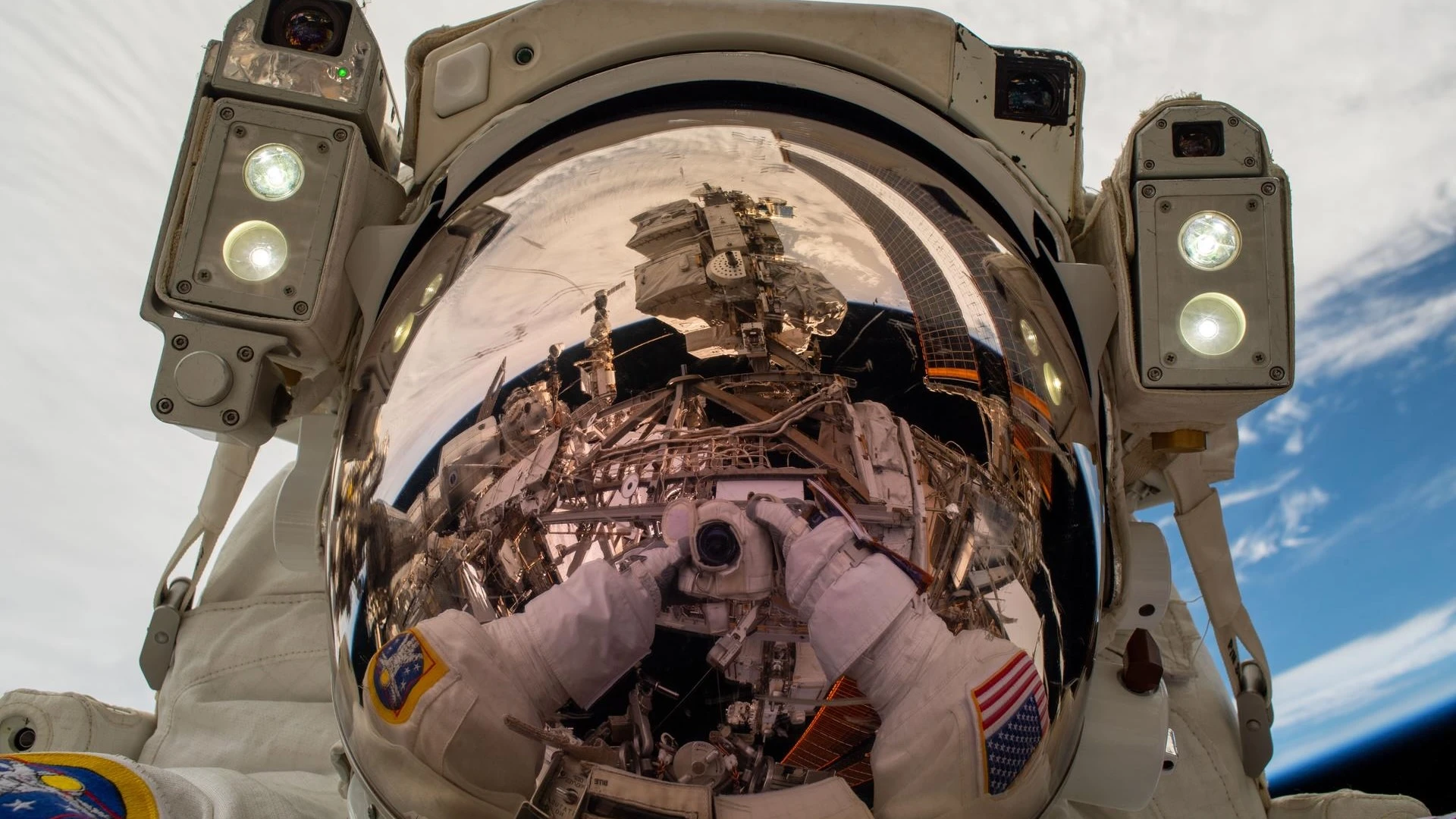
- Astronauts Anil Menon and Joshua Kutryk complete 6-hour, 22-minute spacewalk outside the ISS.
- Successfully install and deploy final IROSA roll-out solar array, boosting orbital electrical power by 30%.
- Completes multi-year power modernization program ensuring continuous laboratory research through 2030.
HOUSTON & CAPE CANAVERAL, Fla. — Floating 260 miles above the Pacific Ocean in the freezing vacuum of low Earth orbit, NASA astronaut Anil Menon and Canadian Space Agency astronaut Joshua Kutryk successfully completed a six-hour, twenty-two-minute extravehicular activity (EVA) outside the International Space Station on Friday. The milestone mission successfully unfurled and secured the station's final International Space Station Roll-Out Solar Array (IROSA), completing a multi-year, multi-billion-dollar orbital power upgrade project designed to keep the aging laboratory fully operational through the end of the decade.
The high-stakes spacewalk began at 8:12 a.m. Eastern Time as Menon and Kutryk switched their Extravehicular Mobility Unit spacesuits to internal battery power before exiting the Quest airlock into the blackness of space. Anchored to the orbital outpost's primary starboard truss via specialized foot restraints and guided by the robotic Canadarm2 operated from inside the station, the astronaut duo meticulously unbolted the 750-pound cylindrical solar canister from its temporary payload attachment fixture.
Working with microgravity torque wrenches and high-tensile structural tethers, Menon and Kutryk maneuvered the advanced solar array across the exterior truss, aligning the mechanical mounting hinges with microscopic precision. Once electrical connectors were mated with the station's primary 160-volt direct-current power channel, flight controllers at NASA Johnson Space Center in Houston signaled the command to release the mechanical launch restraints. Within minutes, the sixty-foot-long flexible solar blanket unfurled seamlessly into space, catching direct solar rays as the station passed over the sunlit hemisphere.
NASA flight directors confirmed that the activation of the final IROSA increases the space station's total electrical generation capacity by thirty percent, restoring peak power levels to 215 kilowatts. The enhanced electrical capacity is urgently required to support power-hungry commercial microgravity research payloads, deep-space biological life-support testbeds, and advanced quantum communication experiments slated for deployment ahead of NASA's planned transition toward commercial low Earth orbit space stations in 2030.
Congressional testimony scheduled for later this month is expected to address cross-agency coordination, focusing specifically on supply chain resiliency, sovereign compute clusters, and long-term capital allocation strategies designed to safeguard domestic competitiveness.