Crude Oil Advances Toward $90 a Barrel as Tightening Supply and Middle East Tensions Rattle Energy Benchmarks
Brent and WTI crude contracts posted strong gains Monday as Strait of Hormuz maritime security incidents and persistent supply constraints fueled inflationary concerns across global equity markets.
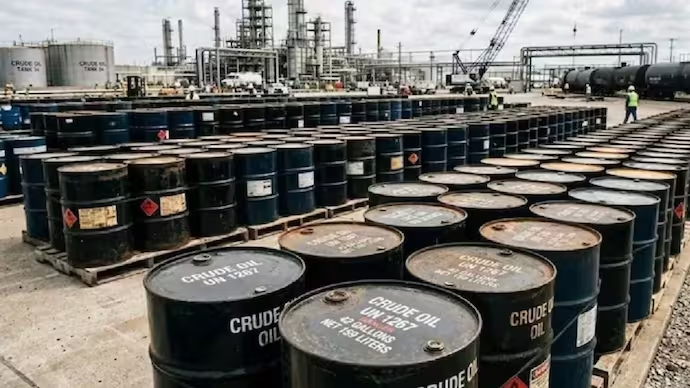
NEW YORK — Global crude oil benchmarks surged higher in volatile trading Monday morning, with Brent crude and West Texas Intermediate (WTI) advancing briskly toward the ninety-dollar-a-barrel threshold following weekend security incidents in the Strait of Hormuz. The price spike has renewed financial market scrutiny over federal inflation projections, corporate profit margins, and retail consumer fuel expenditures heading into the winter heating season.
Energy commodity traders on the New York Mercantile Exchange (NYMEX) reacted swiftly to reports of tanker disruptions along the Persian Gulf's primary maritime corridor, through which approximately twenty percent of the world's petroleum transit passes daily. Analysts noted that while commercial shipping lanes remain open, maritime insurance syndicates at Lloyd's of London have sharply raised war-risk insurance premiums for commercial vessels operating in the region.
The resurgence in energy commodities comes at a delicate juncture for central bankers. Federal Reserve officials and global monetary policy planners have closely tracked headline energy metrics, warning that sustained crude prices above $85 per barrel could create persistent inflationary pressure on transportation logistics, air travel, and chemical manufacturing, potentially delaying anticipated interest rate adjustments.
Domestically, U.S. oil and gas producers operating across the Permian Basin in Texas and New Mexico noted that while domestic extraction volumes remain near historic highs of 13.4 million barrels per day, capital discipline and supply chain bottlenecks for drilling equipment continue to constrain rapid output surges. Energy economists expect refinery utilization rates to remain elevated as refiners balance seasonal gasoline transitions with robust commercial aviation kerosene demand.
Congressional testimony scheduled for later this month is expected to address cross-agency coordination, focusing specifically on supply chain resiliency, sovereign compute clusters, and long-term capital allocation strategies designed to safeguard domestic competitiveness.