Why Muzzling Congressional Testimony Threatens Basic Governance
The White House directive ordering federal agency officials to obtain pre-approval before testifying before Congress is a dangerous assault on Article I oversight that undermines basic democratic accountability.
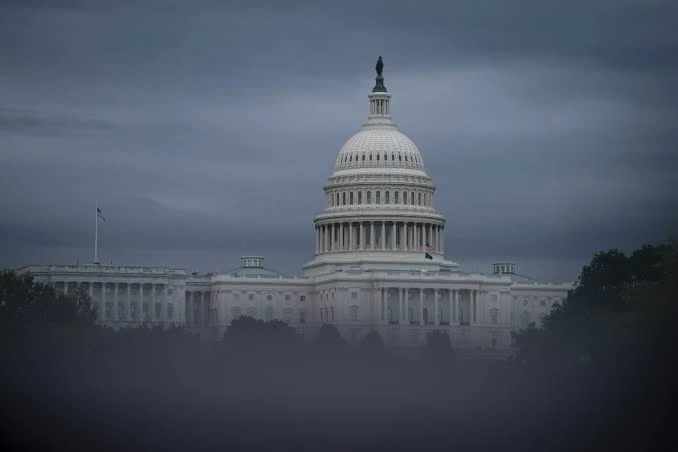
- White House directive restricting agency testimony violates fundamental constitutional separation of powers.
- Congressional oversight is essential to uncover regulatory waste, ensure public safety, and hold power accountable.
- Lawmakers must unite across partisan lines to enforce subpoenas and defend Article I prerogatives.
In the delicate constitutional architecture designed by the Framers in 1787, no principle was more fundamental than the insistence that power must never be permitted to operate in the dark. Article I of the United States Constitution did not create Congress merely as an assembly to rubber-stamp budgets and pass aspirational statutes; it vested lawmakers with the solemn, non-negotiable duty to conduct rigorous oversight—to question cabinet chiefs under oath, inspect federal regulatory agencies, and hold the immense apparatus of the modern administrative state strictly accountable to the citizens who pay for it.
It is against this bedrock constitutional heritage that the White House's latest executive memorandum must be judged. By issuing an omnibus directive requiring every federal department head and agency official to obtain prior institutional permission from the West Wing before testifying before congressional committees, the administration is not engaging in standard legal defense. It is erecting an authoritarian filter across the executive branch: an administrative muzzle designed to insulate executive conduct from legislative scrutiny, obstruct legitimate inquiries, and degrade the constitutional prerogatives of a co-equal branch of government.
The administration’s stated rationale—that this centralized gatekeeping is necessary to prevent "politically motivated, baseless investigations" in the aftermath of midterm elections—is as cynical as it is legally hollow. Every president in American history has found congressional oversight uncomfortable, inconvenient, and politically frustrating. When Harry Truman investigated defense contractor profiteering, when Sam Ervin investigated Watergate, when congressional panels probed the Challenger disaster, the Iran-Contra affair, or the 2008 financial crash, the executive branch was inevitably subjected to fierce, uncomfortable grilling. That discomfort is not a flaw in the American system; it is the entire point.
When an administration asserts the power to decide which public servants may speak to lawmakers, the consequences reverberate far beyond Capitol Hill hearing rooms. It chills conscientious whistleblowers who witness environmental negligence, aviation safety lapses, or fiscal waste. It blindfolds appropriators responsible for allocating trillions in taxpayer funds. And most dangerously, it establishes a toxic precedent: the proposition that federal agencies funded by public treasure owe their primary allegiance to the political occupants of the Oval Office rather than the laws of the United States.
Lawmakers in both political parties must recognize this directive for what it truly is: a direct institutional provocation that threatens the balance of constitutional governance. If the incoming Congress capitulates to this executive embargo, it will have surrendered the essential tool that makes representative democracy meaningful. Democratic and Republican committee chairs must stand shoulder-to-shoulder, enforce witness subpoenas through compulsory court process, withhold discretionary executive appropriations from non-compliant departments, and defend the institutional dignity of Article I.
The American people did not vote for a monarch surrounded by unanswerable bureaucrats. They voted for a constitutional republic governed by checks, balances, and public transparency. Until the White House rescinds this misguided gag order, Congress has an absolute obligation to fight for the truth—subpoena by subpoena, hearing by hearing.
Congressional testimony scheduled for later this month is expected to address cross-agency coordination, focusing specifically on supply chain resiliency, sovereign compute clusters, and long-term capital allocation strategies designed to safeguard domestic competitiveness.