Columbia Zuckerman Study Reveals Brain Neurons Act as Versatile Multitaskers Rather Than Rigid Specialists
Published in Nature, researchers at Columbia's Zuckerman Institute analyzed over 14,000 neurons across 43 brain regions, proving most cortical cells operate like flexible 'Swiss Army knives' rather than single-job tools.
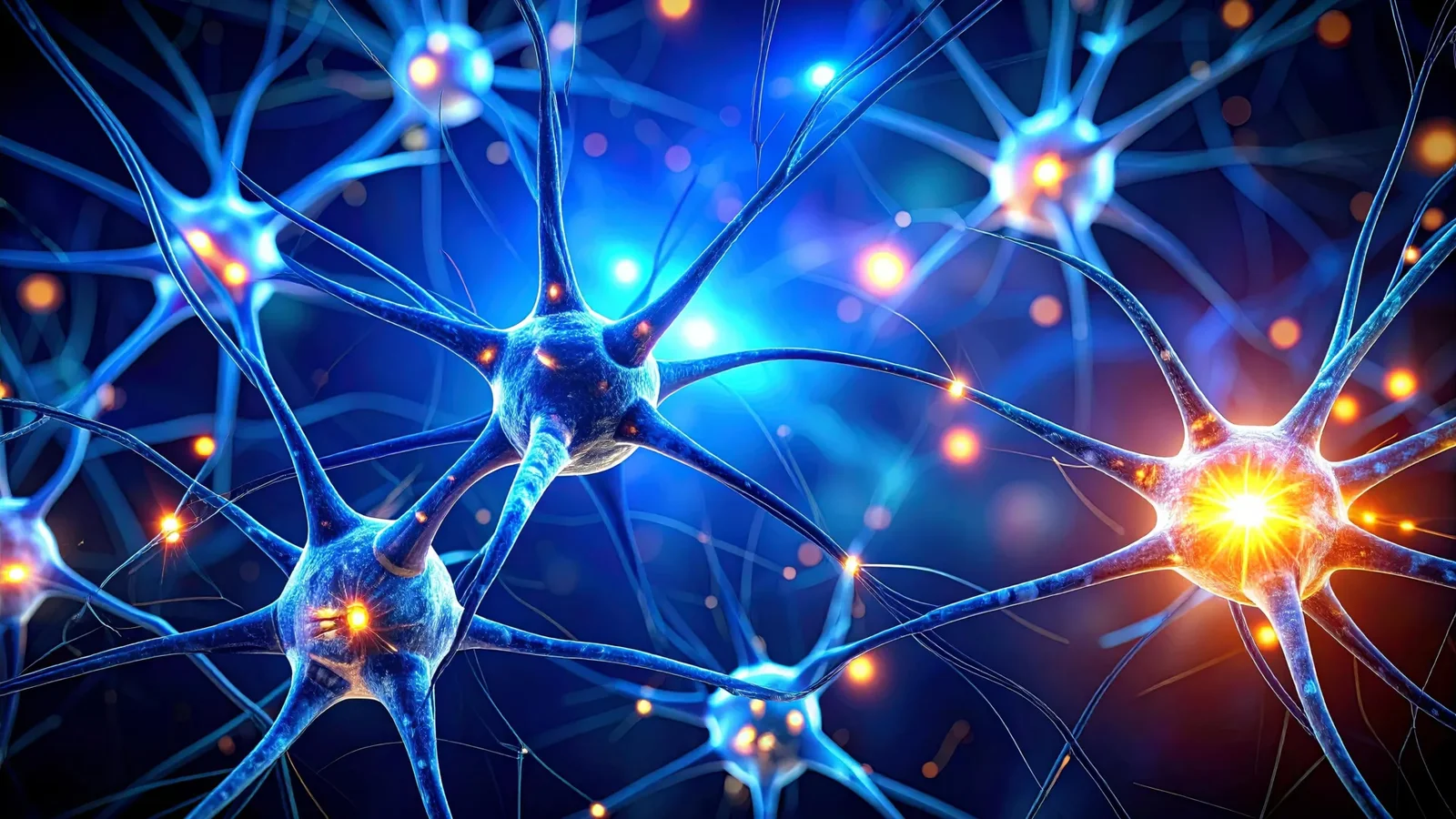
- Published in Nature, Columbia Zuckerman Institute scientists examined over 14,000 individual neurons spanning 43 regions of the mouse brain using International Brain Laboratory data.
- Rather than single-purpose gears, the vast majority of cortical neurons display 'mixed selectivity,' adapting like Swiss Army knives across sensory, motor, and decision tasks.
- Strict specialists remain concentrated in early sensory regions like primary visual cortex, whereas cognitive flexibility climbs steeply across higher-order associative areas.
Challenging decades of textbook neuroscience that pictured individual brain cells like single-function assembly-line gears, a landmark study out of Columbia University’s Zuckerman Mind Brain Behavior Institute demonstrates that the overwhelming majority of cortical neurons behave as adaptable "multitaskers"—reconfiguring rapidly like Swiss Army knives across perception, movement, and choice.
Published in the peer-reviewed journal *Nature* and led by Stefano Fusi, PhD, principal investigator at Columbia’s Zuckerman Institute in Manhattanville, alongside co-lead author Lorenzo Posani, PhD of the Paris Brain Institute (formerly a researcher at Columbia), the research leveraged an unprecedented collaborative dataset assembled by the International Brain Laboratory.
Mapping 14,000 Neurons Across 43 Brain Regions
To test how specialization varies across biological intelligence at brain-wide scale, Fusi, Posani, and collaborating theorists analyzed electrical recordings from more than 14,000 individual neurons spanning 43 distinct regions of the mouse brain while animals executed complex perceptual decision-making behaviors.
Rather than finding tidy silos where one cell fires exclusively for a visual cue and another strictly for a physical paw turn, the team uncovered pervasive "mixed selectivity" throughout cortical architecture: single neurons routinely encoded shifting, nonlinear combinations of sensory inputs, motor actions, and internal decision states simultaneously.
Where Specialists End and Generalists Take Over
Crucially, the data revealed an anatomical gradient organizing specialization across the brain. Narrowly tuned "specialist" neurons—comparable to single-task hammers or saws—do exist, the authors report, yet they are concentrated predominantly within primary sensory regions responsible for registering raw incoming data such as basic visual edges. As neural pathways ascend deeper into higher-order frontal and associative regions governing executive planning, cognitive generalists dominate nearly every recorded circuit.
For New York’s thriving computational neuroscience community—and machine-learning researchers working adjacent to biological architectures—the findings carry major implications. High-dimensional mixed selectivity explains how biological brains generalize cleanly to unfamiliar problems with sparse data and resilient grace under injury, offering blueprints for next-generation neuromorphic and AI systems seeking real-world adaptability without brittle single-task catastrophic forgetting.
Congressional testimony scheduled for later this month is expected to address cross-agency coordination, focusing specifically on supply chain resiliency, sovereign compute clusters, and long-term capital allocation strategies designed to safeguard domestic competitiveness.