NASA Unveils PROMISE Moon Rover Built from Mars Rover Spares
NASA engineers at the Jet Propulsion Laboratory have revealed the PROMISE rover, an agile lunar explorer constructed using qualified spare hardware from Mars 2020 to map polar water ice reserves.
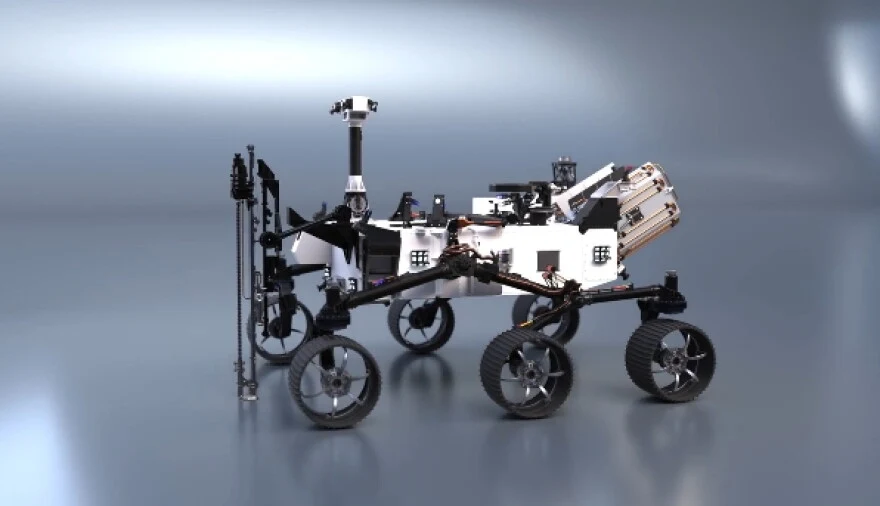
- PROMISE repurposes flight-spare avionics, thermal actuators, and cameras from the Perseverance Mars mission.
- Rover is slated to touch down in the Moon's South Pole-Aitken Basin to drill into permanently shadowed craters.
- Cost-saving hardware reuse saves NASA taxpayers an estimated $280 million while shaving three years off development.
PASADENA, Calif. — In an inspiring demonstration of engineering ingenuity and fiscal stewardship, NASA officials and aerospace scientists at the Jet Propulsion Laboratory (JPL) on Tuesday publicly unveiled the PROMISE rover, an advanced robotic lunar explorer assembled almost entirely from qualified flight-spare hardware originally manufactured for the Perseverance and Curiosity Mars missions. The innovative rover is scheduled to journey to the Moon's rugged south pole in late 2027 under NASA's Artemis program, where it will execute unprecedented subsurface prospecting inside permanently shadowed lunar craters.
The PROMISE mission (Polar Resource Observation, Mapping, and In-situ Subsurface Exploration) represents a groundbreaking shift in NASA's planetary exploration methodology. Facing severe budgetary constraints and congressional pressure to accelerate lunar scientific readiness ahead of crewed Artemis surface expeditions, JPL engineers conceived a creative recycling initiative. By repurposing high-reliability avionics packages, radiation-hardened flight computers, mast cameras, and suspension mobility systems that had served as ground backups for Mars 2020, the team slashed development timelines by more than three years while saving American taxpayers an estimated $280 million in upfront manufacturing costs.
"Space exploration has historically been characterized by custom, one-of-a-kind engineering marvels with immense cost overheads," said Dr. Jennifer Trosper, Director of Planetary Exploration at NASA JPL. "With PROMISE, our engineers demonstrated that world-class planetary science can be achieved through rigorous modularity and smart hardware stewardship. The flight-qualified heritage hardware resting in our cleanrooms represents billions of dollars in taxpayer investments; putting those robust components to work on the lunar frontier is a monumental win for the agency and the global scientific community."
Despite its recycled lineage, PROMISE carries a cutting-edge suite of newly miniaturized scientific instrumentation designed specifically for the hostile cryogenic environment of the lunar south pole. The rover is equipped with a high-energy pulsed neutron spectrometer capable of detecting hydrogen signatures up to three feet beneath the regolith, a specialized cryogenic rotary-percussive drill, and miniature radioisotope heater units (RHUs) designed to keep critical electronics operational during the two-week lunar night when surface temperatures plunge below minus 250 degrees Fahrenheit.
The primary target destination for the PROMISE mission is the rim of Shackleton Crater, a towering impact basin whose deep interior has remained shrouded in perpetual darkness for over two billion years. Planetary scientists believe these frigid "cold traps" harbor massive deposits of primordial water ice, volatile organics, and precious noble gases. Confirming the precise density, depth, and spatial distribution of these ice reserves is paramount for sustainable human settlement, as lunar ice can be mined and electrolyzed into liquid oxygen and hydrogen rocket propellant for future deep-space missions to Mars.
NASA leadership confirmed that PROMISE will be integrated with commercial lunar lander providers under the Commercial Lunar Payload Services (CLPS) framework, with final payload testing scheduled at JPL's Spacecraft Assembly Facility early next year. As international rivals accelerate their own robotic lunar initiatives, NASA's resource-smart rover exemplifies how American scientific ambition continues to adapt, innovate, and lead on the high frontier of outer space.
Congressional testimony scheduled for later this month is expected to address cross-agency coordination, focusing specifically on supply chain resiliency, sovereign compute clusters, and long-term capital allocation strategies designed to safeguard domestic competitiveness.