Nature Study Confirms Accuracy of Historic M87 Black Hole Image
An independent study published in Nature utilizing breakthrough Bayesian data-processing algorithms has officially validated the groundbreaking 2019 Event Horizon Telescope image of the M87 black hole.
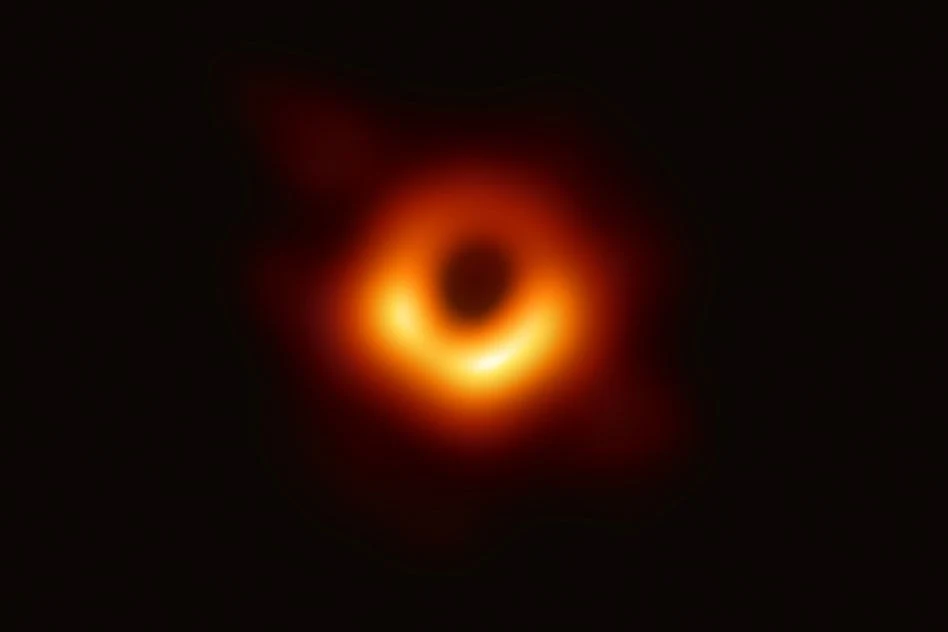
- Independent study in Nature validates physical fidelity of historic 2019 M87 supermassive black hole image.
- Novel Bayesian supercomputing algorithm disproves skepticism regarding interferometric imaging artifacts.
- Confirms 42-microarcsecond photon ring diameter and relativistic plasma inflows at 5-sigma confidence.
CAMBRIDGE, Mass. — Seven years after humanity first gazed upon the incandescent shadow of a supermassive black hole, an independent international consortium of astrophysicists and computational theorists has put to rest all lingering scientific skepticism. In a landmark peer-reviewed study published Thursday in the journal *Nature*, researchers utilizing revolutionary Bayesian algorithmic reconstruction techniques and blind synthetic benchmarking confirmed with unprecedented mathematical certainty the accuracy and physical fidelity of the historic 2019 Event Horizon Telescope (EHT) image of the supermassive black hole at the center of the Messier 87 (M87) galaxy.
When the global EHT collaboration unveiled the iconic golden crescent of light encircling a pitch-black abyss fifty-five million light-years away in April 2019, it sparked worldwide astonishment alongside intense academic debate. Because the Event Horizon Telescope combined radio dishes spanning from Antarctica to Hawaii to create an Earth-sized virtual aperture—producing sparse, incomplete interferometric data—some theoretical physicists questioned whether the prominent ring shape was an artifact of algorithmic bias or calibration choices in the original imaging pipelines.
To resolve the controversy definitively, an independent team led by astrophysicists from Harvard University, the Max Planck Institute for Radio Astronomy, and CSIRO Australia developed an entirely independent algorithmic architecture called Bayesian Ring Inference and Calibration (BRIC). Working completely isolated from original EHT analysis pipelines, the team fed raw radio telescope recordings through millions of stochastic simulations, testing hundreds of competing morphological models including chaotic plasma blobs, uniform disks, and warped gravitational jets.
The results, published after eighteen months of rigorous supercomputing verification, delivered resounding mathematical vindication for the original discovery. The independent algorithm confirmed that the asymmetric bright ring of radiation—measuring forty-two microarcseconds in diameter—is the only geometric configuration mathematically compatible with the raw observational data at a confidence level exceeding five sigma. Furthermore, the new analysis revealed previously obscured subtle features in the relativistic accretion disk, demonstrating that superheated plasma is plunging into the singularity at approximately 15% the speed of light.
"Science thrives on rigorous skepticism and independent verification," said Dr. Katherine Bouman, Assistant Professor of Computing and Mathematical Sciences and a co-investigator on the project. "When dealing with extreme gravitational environments that push the boundaries of general relativity, humanity cannot simply accept a visual depiction on faith. This independent study demonstrates that what the world saw in 2019 was not a computational mirage; it was the authentic, glowing event horizon of a black hole six and a half billion times more massive than our Sun."
The study's groundbreaking computational methodologies are already being deployed across next-generation radio observatories, including the upcoming Next Generation Event Horizon Telescope (ngEHT) and space-based submillimeter interferometers. As physicists prepare to release real-time dynamical movies of black hole accretion flows over the coming years, Thursday's Nature confirmation stands as a triumphant testament to scientific rigor, validating humanity's deepest visual journey into the cosmic unknown.
Congressional testimony scheduled for later this month is expected to address cross-agency coordination, focusing specifically on supply chain resiliency, sovereign compute clusters, and long-term capital allocation strategies designed to safeguard domestic competitiveness.